If you have been watching the block at Franklin and Church, you have seen something remarkable happening over the past year. The heavy postwar office building at 101 Franklin, which used to house the city’s Human Resources Administration and Department of Social Services, has been slowly stripped down to its concrete bones. The brick and ribbon windows are gone. What is left is a skeleton, waiting to become something else.
That something else, as of a Community Board 1 approval in March, will be 72 luxury condominium residences across a rebuilt 21-story tower. The developers, Skylight Real Estate Partners, Cannon Hill Capital Partners, and TPG, acquired the building in 2024 for more than $100 million. The architect is Steven Harris, a longtime Tribecan who designed 7 Harrison and several other apartments in the neighborhood, and whose vision for 101 Franklin is unapologetically classic: brick facade, expansive windows, deep setbacks, a building meant to be contextual with the surrounding blocks. Sales are expected to launch later in 2026 or 2027, with completion projected for 2029.
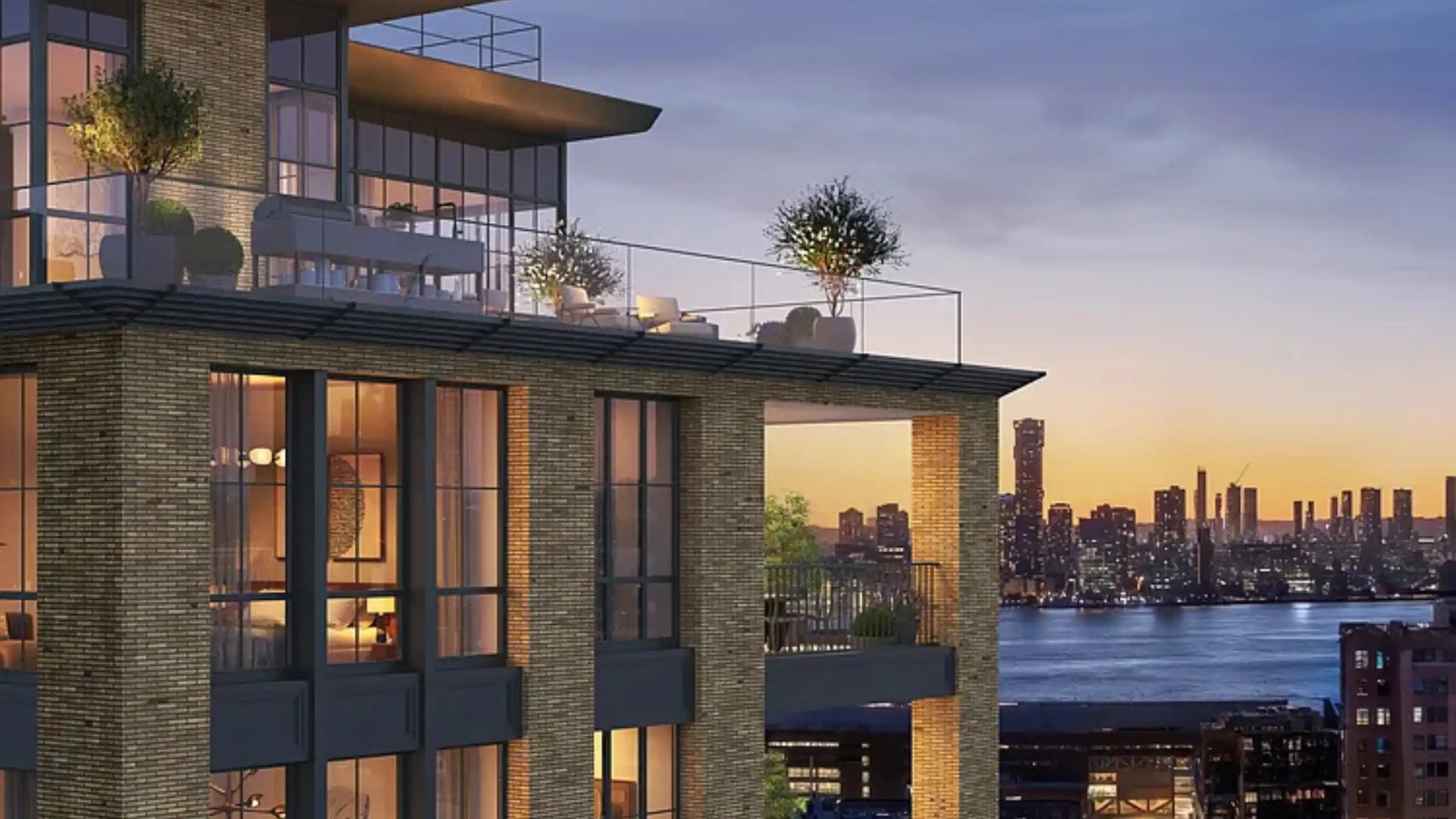
Rendering of 101 Franklin at sunset
101 Franklin is the current headline in a story Tribeca has been quietly telling for half a century. This neighborhood has always been in the business of turning empty buildings into housing. What has changed is which buildings are the ones being converted.
For most of that history, the buildings were warehouses. When artists started colonizing lower Manhattan in the 1970s, they moved into the great cast-iron and brick lofts that had been built for the textile, dry goods, and produce trades a hundred years earlier. Those industries had long since left, and the buildings were sitting empty. The Fleming Smith Warehouse at Watts and Washington, which I wrote about previously, was the first commercial building in the neighborhood to be legally converted to residential use, in 1978 and 1979. The American Thread Building at 260 West Broadway, built in 1893 as the Wool Exchange, followed in 1980. Over the next thirty years, hundreds more followed. Warehouses. Factories. Refrigeration buildings. Sugar refineries. The old Pearline Soap Factory at 414 Washington. The US Sugar Building at 79 Laight. Every one of them ready to be repurposed by the neighborhood.
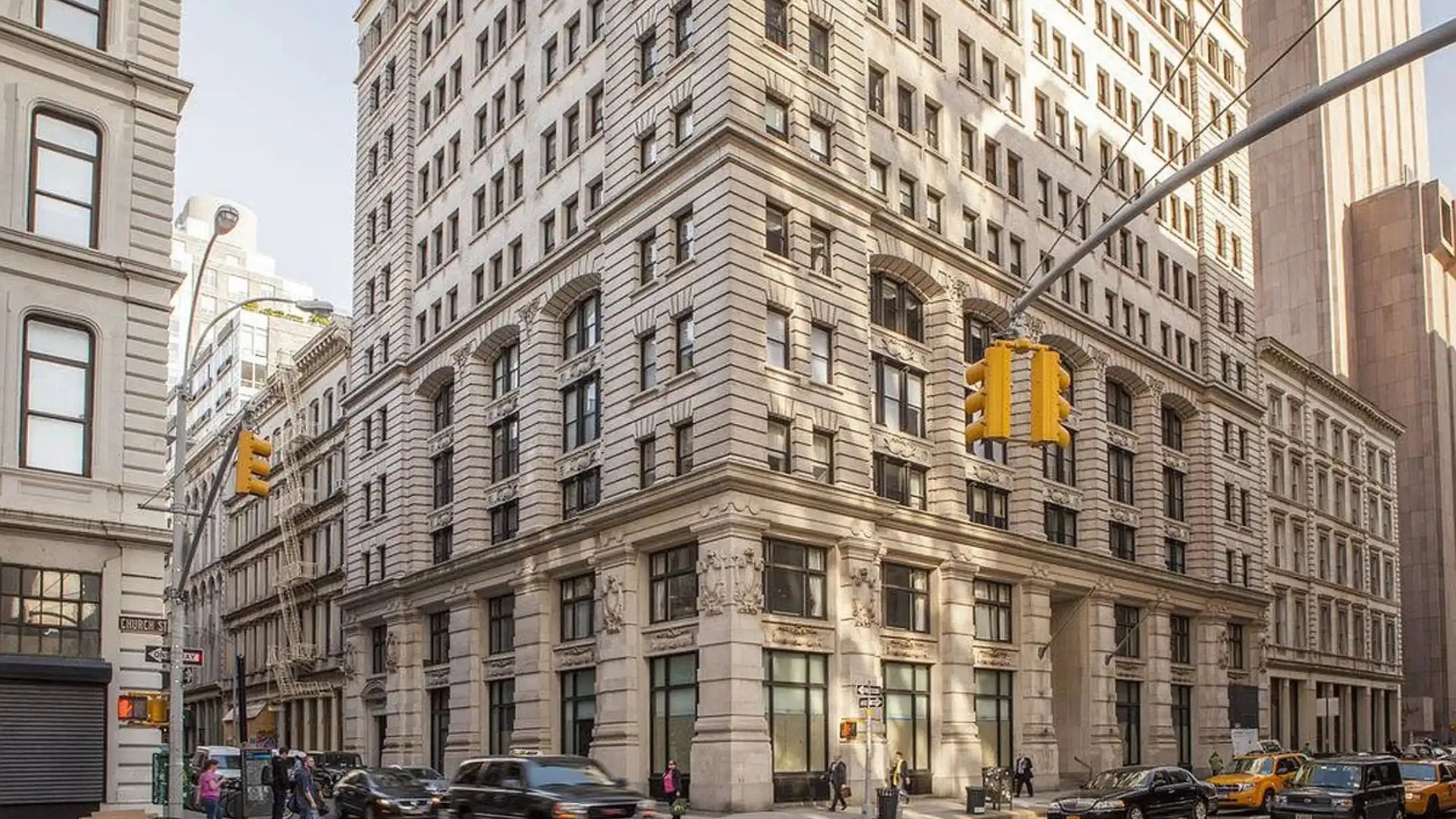
The converted Textile Building at 66 Leonard, originally built circa 1901
The office-to-residential conversions were always the smaller share of the story, but they were there. The Textile Building at 66 Leonard, designed in 1901 by Henry J. Hardenbergh, the same architect who designed the Dakota and the Plaza Hotel, was originally an office building for the Importer’s Building Company. It was converted to 47 condominiums in 1999. The Verizon Building, built between 1923 and 1927 as offices for New York Telephone Company, was converted into condominiums in 2016. The Powell Building at 105 Hudson, designed by Carrere and Hastings in 1892, moved from commercial to residential in stages across the twentieth century.
What is different about the current moment is that the offices are what is empty now. The post-pandemic office vacancy in New York has been well documented, and the city has responded with policy changes designed to make conversions easier. The 2024 City of Yes zoning reforms expanded eligibility for residential conversions to buildings constructed before 1990, up from the earlier pre-1961 and pre-1977 thresholds. There is also the Office Conversion Accelerator, a program that pairs building owners with a single point of contact across city agencies to move conversions through the permitting process faster. Statewide tax incentives make the economics work for developers.
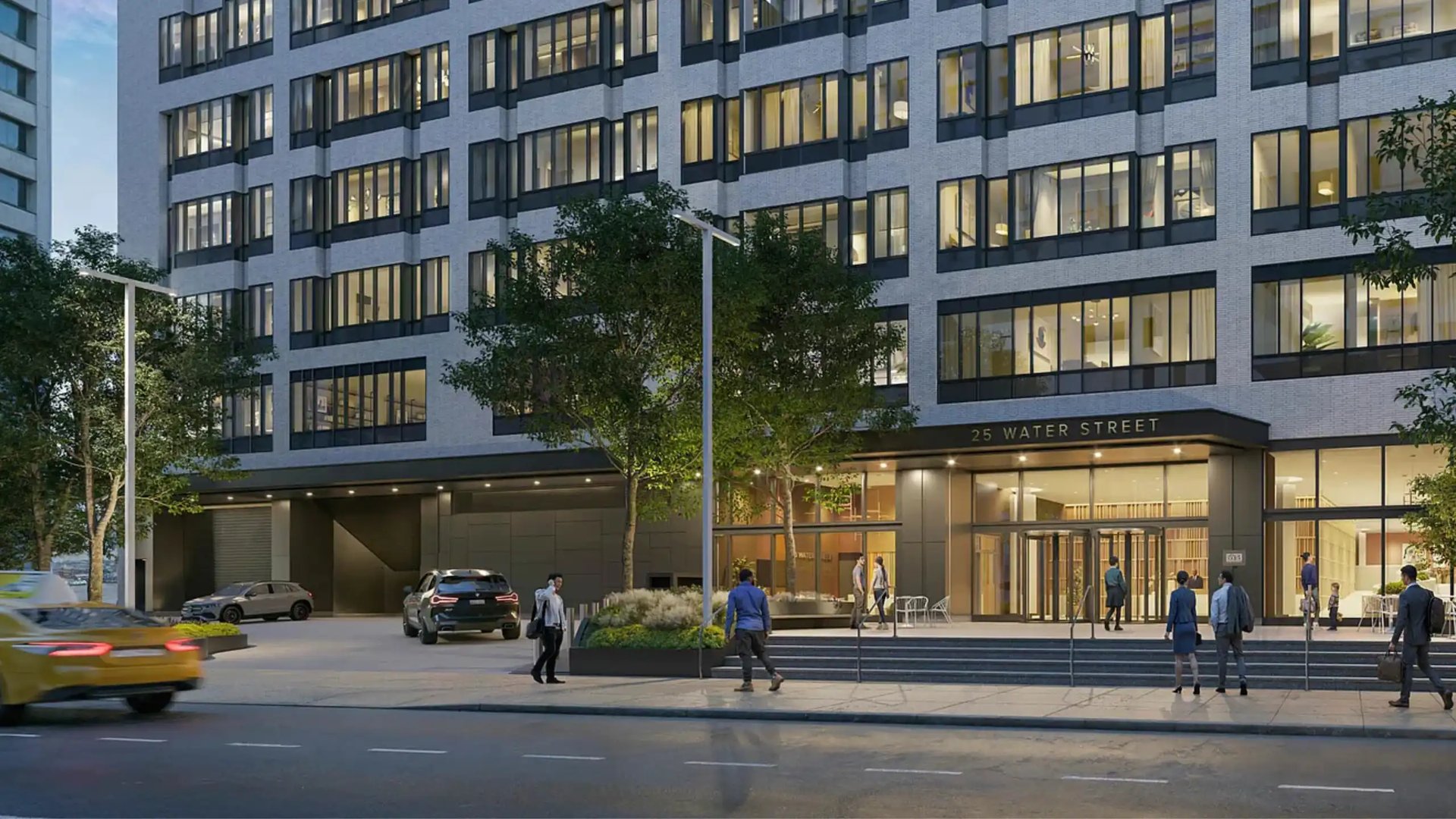
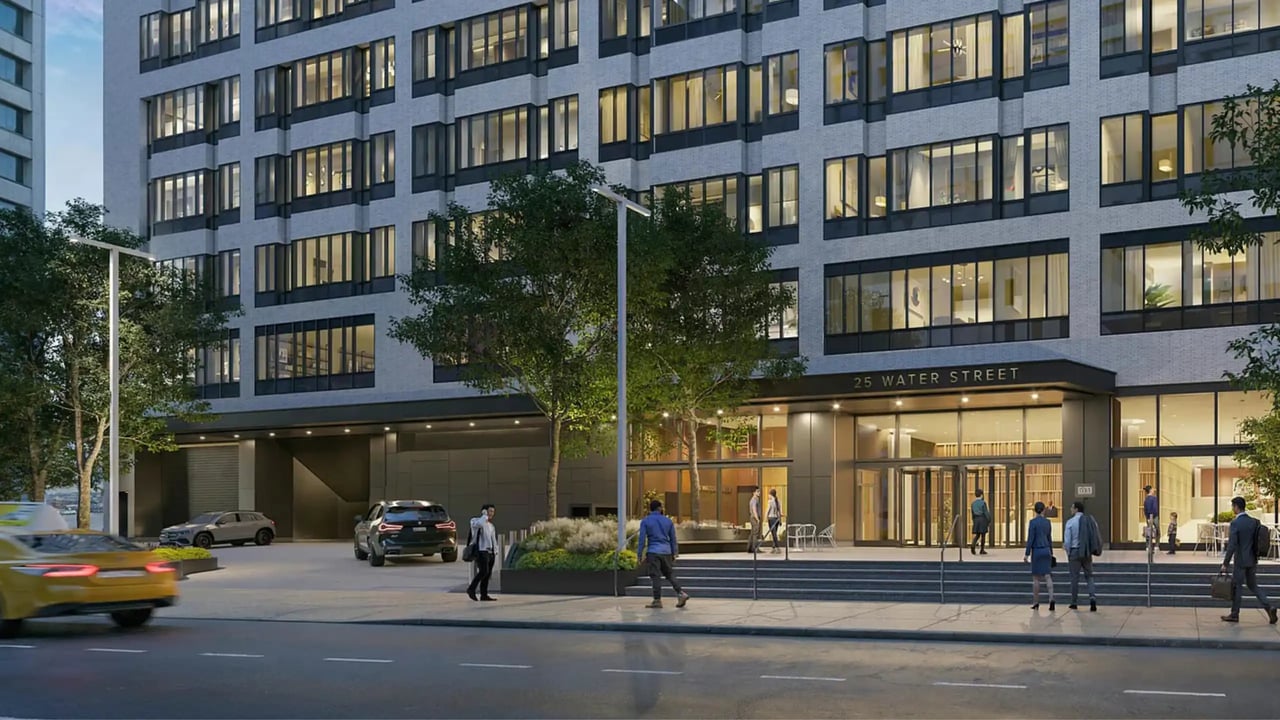
Rendering of the exterior of 25 Water Street, in FiDi, the largest office-to-residential conversion in the nation’s history
The result, according to recent city reporting, is that more than 12,000 new apartments are currently in the pipeline in New York buildings that used to be offices. Most of those are downtown. Lower Manhattan alone has converted more than 26 million square feet of offices into housing since 1995. The 25 Water Street project in the Financial District, at 1,320 units, is the largest office-to-residential conversion in United States history.
Tribeca has fewer big office buildings to work with, so its share of the current wave is smaller. But 101 Franklin is a genuine example of the trend, and it is not the last one the neighborhood will see. Permits were filed in May for a 21-story mixed-use building at 317 Broadway, in the southeast corner of Tribeca. The Landmarks Preservation Commission approved a renovation and residential expansion of 385 Greenwich in April. The broader pattern will keep unfolding over the next several years.
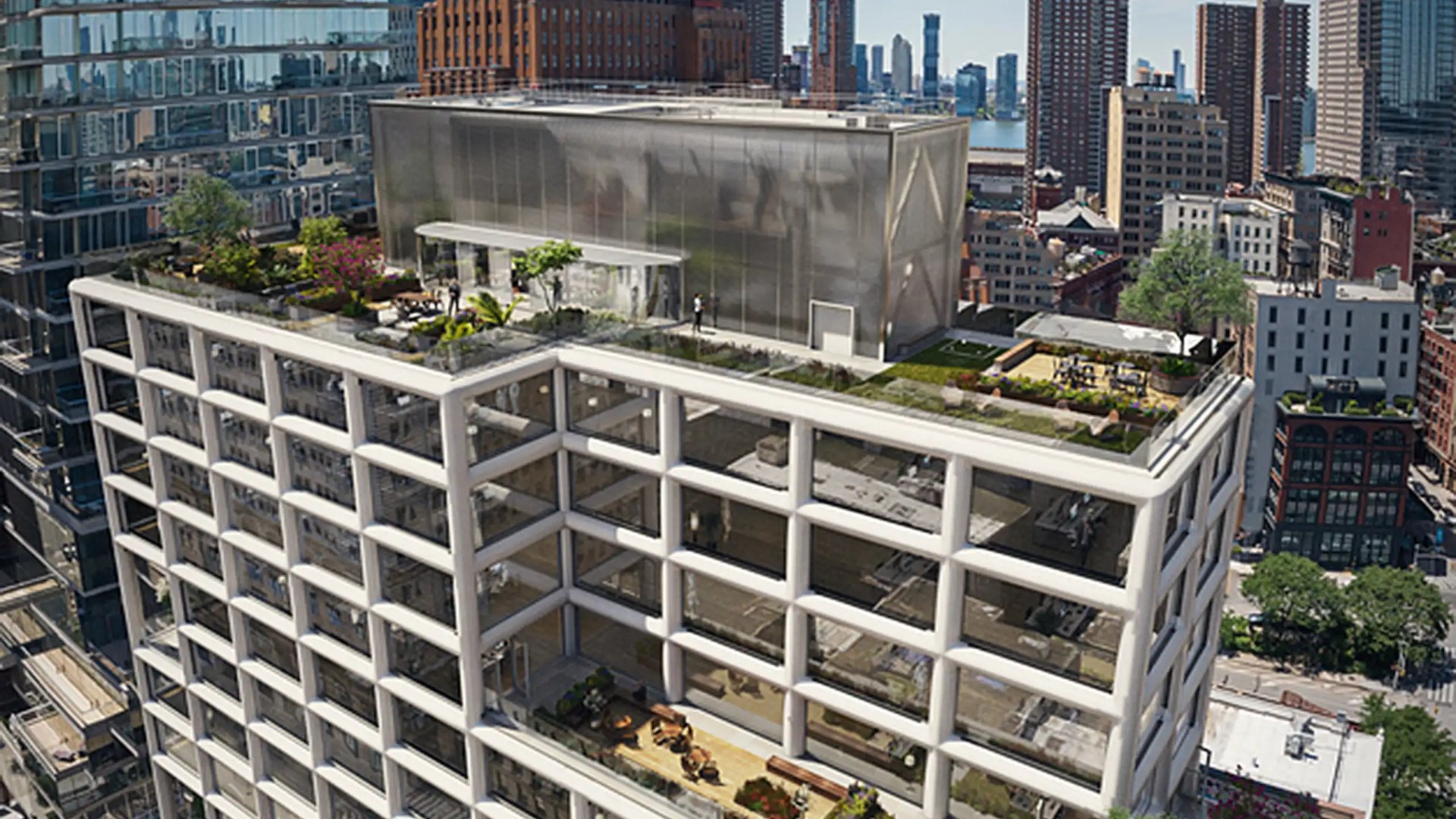
Rendering of 101 Franklin Street, from above
What I find striking about all of this is the consistency of the underlying pattern. Tribeca is a neighborhood that has always found new life in buildings that other uses have left behind. The warehouses became lofts. The factories became lofts. Some of the offices became lofts along the way, and now more offices are following. Each wave brought its own set of buyers, its own aesthetic, its own moment. The buildings being converted change with the decades, but the impulse to convert them rather than tear them down is one of the quietly consistent things about this place.
For anyone thinking about the neighborhood as a buyer, the current wave is worth understanding. Genuine new residential inventory in Tribeca has been limited for a long time. The current conversion pipeline is one of the few sources of new supply that will actually come to market in the next several years. That matters for pricing, for choice, and for the mix of homes that will be available. If you would like to talk through what any of these projects might mean for your own plans, I am always happy to be a resource.
Reach out at [email protected] or (917) 267-8012.