

The Tribeca Hiding in Plain Sight
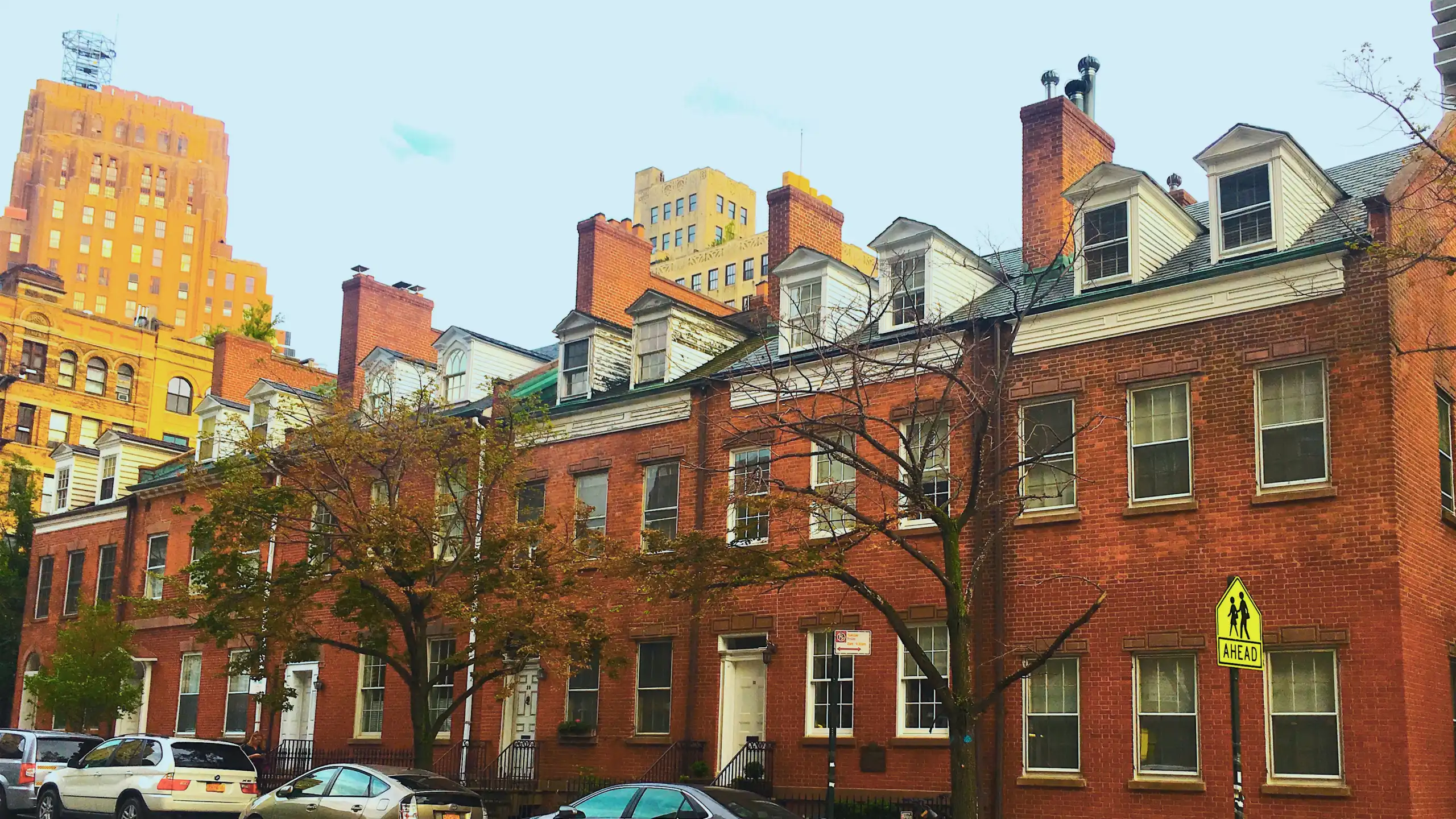
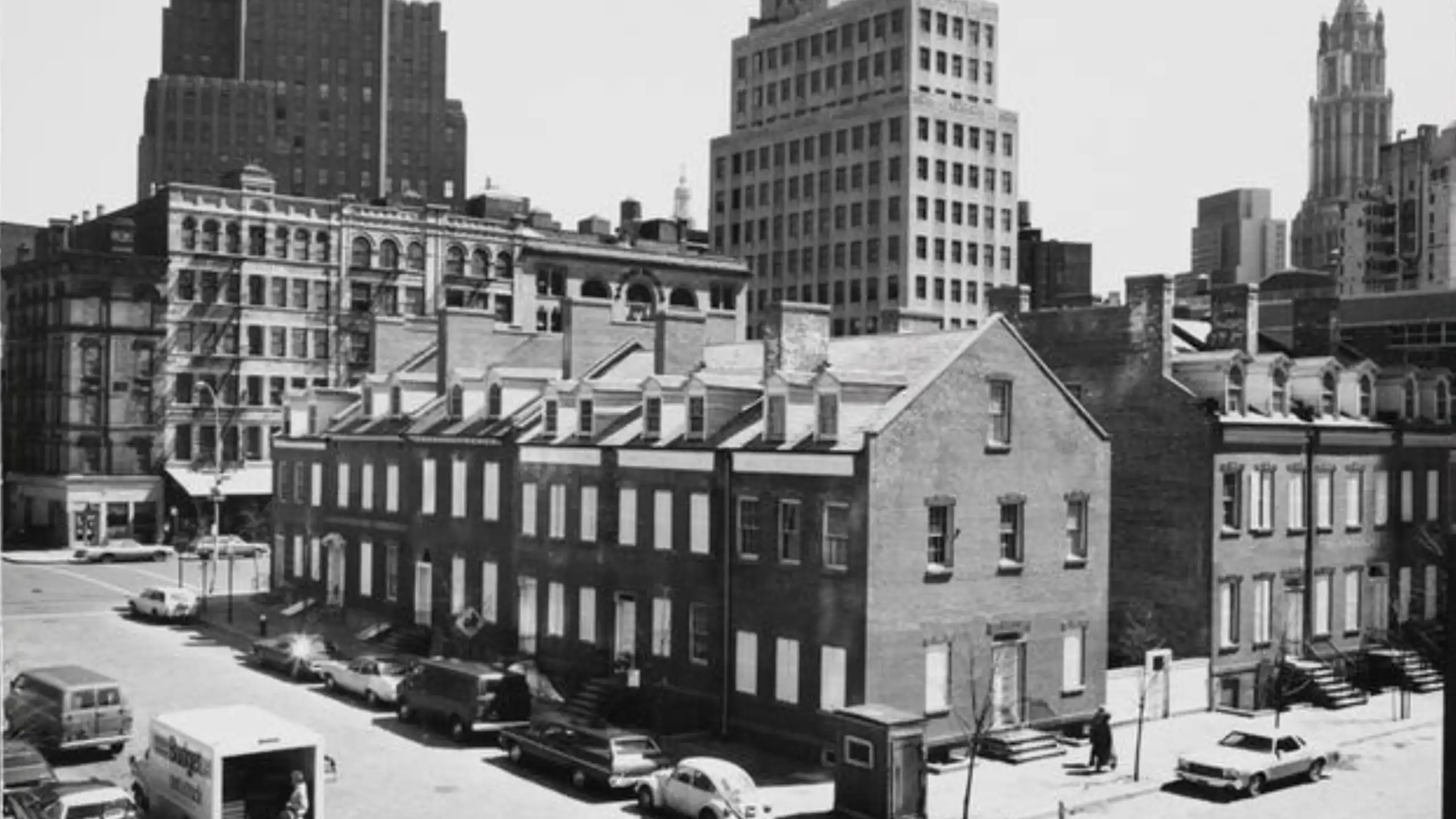
Every time I pass the three small Federal-style row houses at the corner of Harrison and Greenwich, I marvel at the fact that they were not actually built there. They were lifted off their foundations in the 1970s, put on trucks, and driven two blocks west from a stretch of Washington Street that was being demolished to make room for Independence Plaza. The Landmarks Preservation Commission, which had been formed only a few years earlier, decided they were too rare to lose.
One of them, originally designed by John McComb Jr., who also helped design City Hall, partially collapsed during the move and had to be rebuilt. They now sit in an L-shaped cluster with six older Federal houses that were already on Harrison, on a cobblestone block that looks like it has always been there, but actually hasn’t.
Tribeca is full of small things like that. After all these years of walking the blocks here in the mornings with my dogs, I am still finding them.
A lot of it has to do with how recently the neighborhood as we know it came into being. The buildings on White, Walker, Worth, and the surrounding side streets are mostly from the 1850s to the 1880s, when this was a textile and dry goods district. The name “Tribeca” is younger by more than a century. It was coined in the 1970s by a real estate broker advertising lofts in the new district, as shorthand for “Triangle Below Canal.” While many are aware of that tidbit, the disconnect is rarely considered: the structures surrounding us are typically three times the age of the neighborhood’s very name.
Many of these buildings boast cast-iron facades, and while this type of construction is most closely associated with SoHo, cast-iron architecture remains a distinguishing characteristic of Tribeca. The reason there are so many of them, all bunched together and looking the way they do, is that cast-iron arrived as a building material in the mid 19th century and changed how merchants could build. It was prefabricated, fireproof, and cheap enough that you could throw up an imposing five-story warehouse in months rather than years.
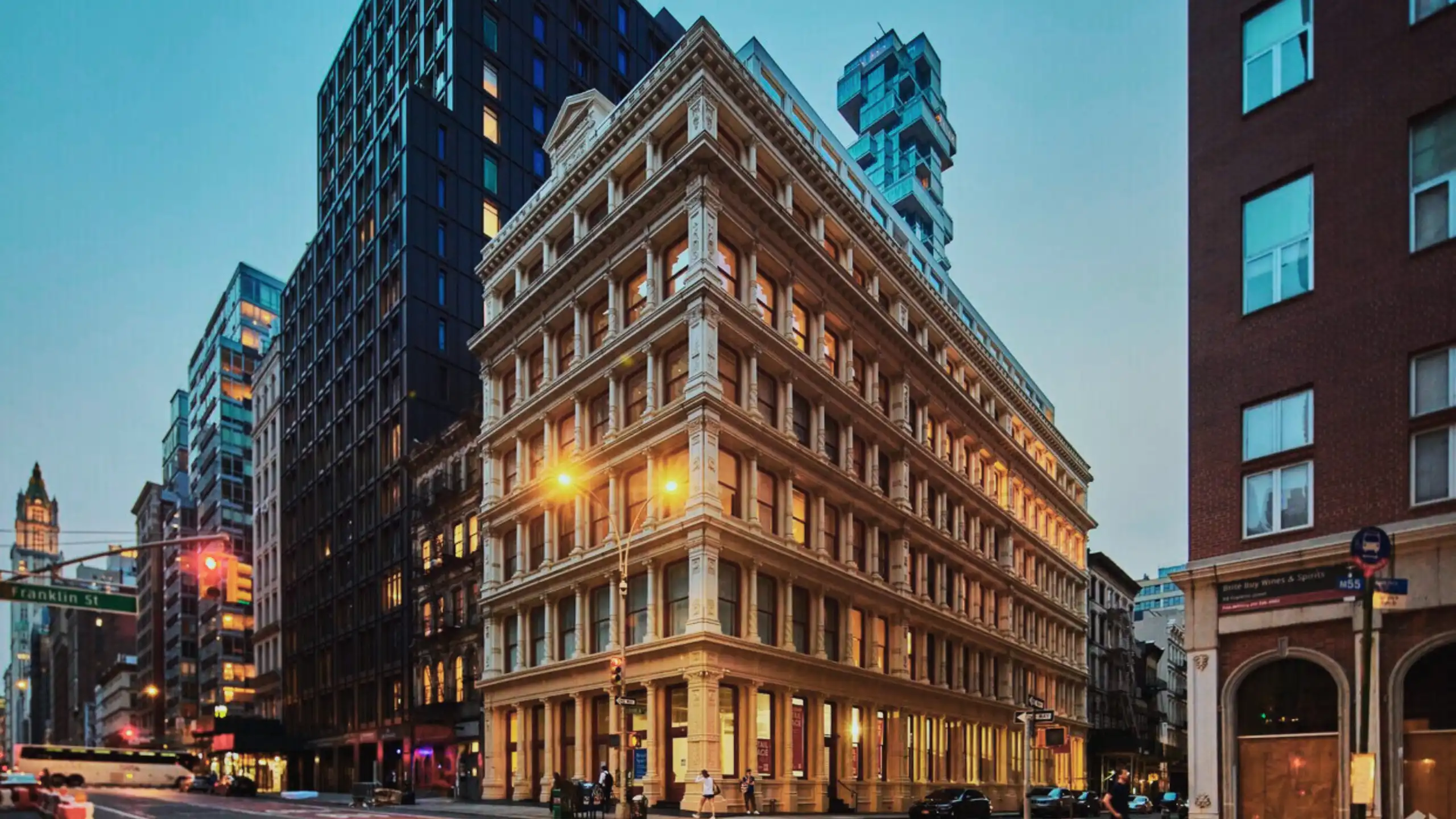
Tribeca and SoHo, together, hold the largest concentration of cast-iron building facades anywhere in the world. Most of those facades were painted to look like marble or limestone. The grand effect is partly a trick. The grandest of Tribeca’s collection is the Cast Iron House at 361 Broadway and Franklin, built in 1881 for the textile trade and now housing condos designed by Shigeru Ban.
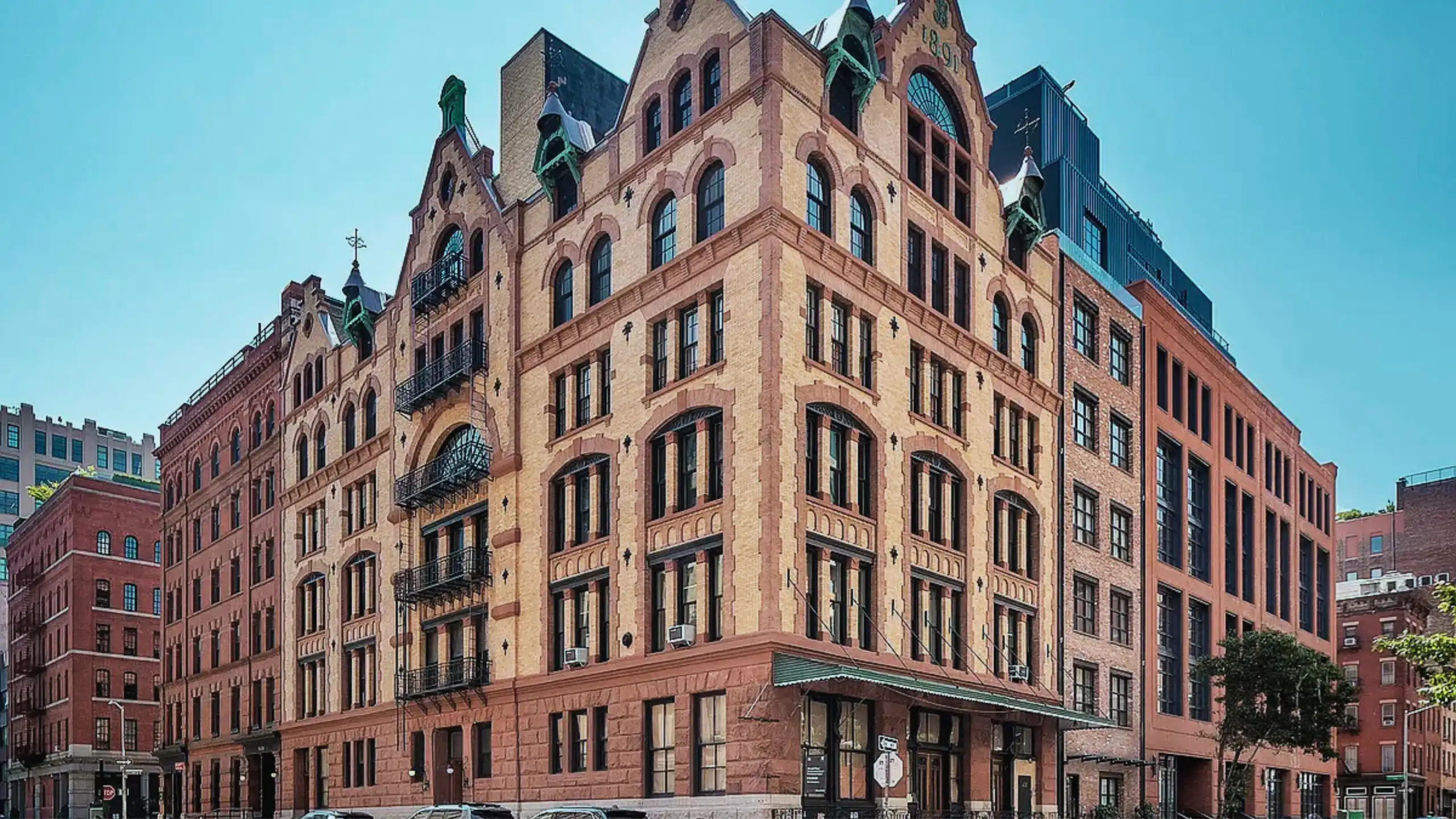
A few blocks north, at the corner of Washington and Watts, is a building that quietly started everything. The Fleming Smith Warehouse, built in 1891 and 1892 by the merchant Fleming Smith and designed by Stephen Decatur Hatch, is a six-story Romanesque and neo-Flemish brick beauty with stepped gables and copper-trimmed dormers, a nod to the Dutch heritage of old New York. Smith’s monogrammed “FS” and the year 1891 are still visible in copper on the Watts Street side. What makes it worth pausing for, beyond how striking it is, is that in 1978 and 1979 it became the first commercial building in Tribeca to be converted to residential use. Every loft conversion that came after, every warehouse turned into apartments, traces back to this one.
Returning to the row houses briefly, a few blocks east of where they now sit, around Jay and Hudson, there is that small skybridge you may have seen, arching three stories above Staple Street. It is one of the most photographed corners in the neighborhood, and most of the people taking photos of it come across it by accident. You probably did, too, passing the alley on Staple Street, turning your head, and having it catch your eye.
The bridge was built in 1907 to connect two buildings that both belonged to the New York Hospital. The one on the east was a downtown emergency clinic called the House of Relief. The one on the west held the hospital’s laundry and the stable for the horse-drawn ambulances that ran out across the cobblestones to handle calls in lower Manhattan. The bridge let patients be wheeled directly from the ambulance bay to the operating room across the street. The hospital is long gone, of course. The bridge is now part of a private residence currently for sale. But a small terracotta shield alluding to the bridge’s origins, with the initials N.Y.H., is still visible on the Jay Street facade. Next time you’re walking by, try to find it for yourself.
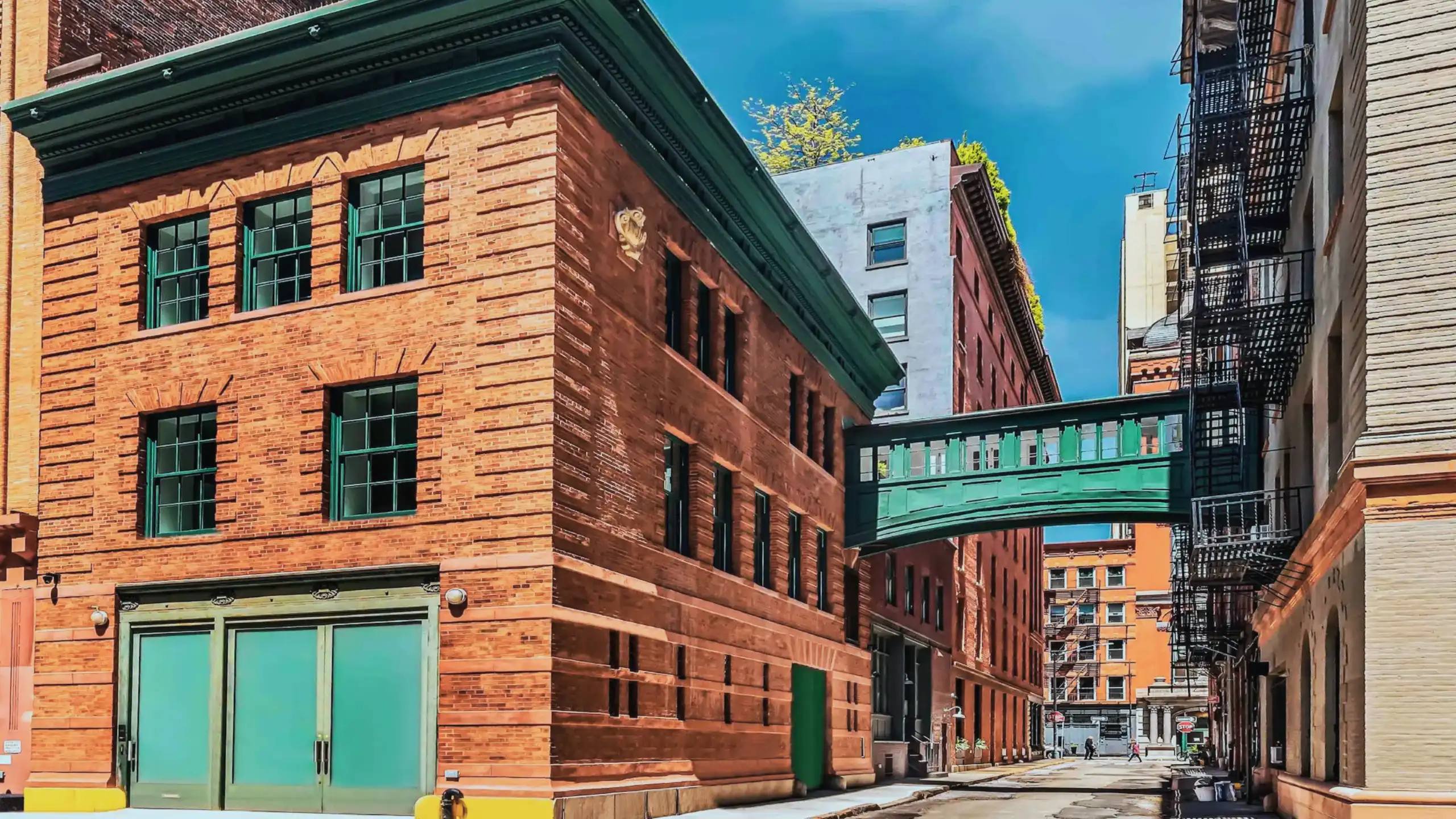
Even the name of the street under the bridge is a mystery. Staple Street has three competing origin stories. The popular theory is that it refers to “staples,” the goods unloaded at the markets that filled this area when the Dutch ran the city. The official Landmarks designation report prefers a different theory, that the street was named for a John J. Staples who owned property nearby around 1800. The third explanation is that it is just a corruption of “stable,” since there used to be a lot of those around, bringing patients into and out of the hospital. No one is sure which is right.
The reason this living history is still here, and not paved over or built up, is that a small group of residents organized in the 1980s and fought for years to get the neighborhood landmarked. The campaign started, in part, as a fight against a proposed eleven-story tower that would have been built on top of 55 White Street. The group, the Committee for the Washington Market Historic District, was led by a resident named Hal Bromm, and it pulled in some of the better-known Tribeca residents of the era, Robert De Niro and Edward Albee and James Rosenquist among them. The tower was stopped, and the campaign resulted in the designation of four historic districts that remain protected to this day. Almost everything described in this piece, the cast-iron facades, the row houses on Harrison, the skybridge, the carved names above doorways and faded signs on brick, sits inside the borders established by those designations.
Much of this is easy to miss, or to take for granted, because Tribeca citizens have done such an excellent job at preserving these historic buildings and keeping the newer additions contextual with the neighborhood, so they fit in easily beside their neighbors. Tribeca is truly a community, and it’s that spirit which has kept the neighborhood active and alive generation after generation.
I encourage you to take a few moments to really soak in your surroundings next time you’re out and about, and if you have a building on your block you have always wondered about, or a detail you’ve always been curious about, write to me at hdomi@heatherdomi.com, or give me call at (917) 267-8012, and let’s figure it out together.
Social Cookies
Social Cookies are used to enable you to share pages and content you find interesting throughout the website through third-party social networking or other websites (including, potentially for advertising purposes related to social networking).