

Tracking Tribeca's New Developments: The Projects to Watch Right Now
If you’ve been walking around Tribeca lately and wondering what’s happening behind the scaffolding on White Street, at Franklin and Broadway, or on the Lispenard corner, you’re not alone.
One of the things I love most about Tribeca is that even when it changes, it rarely changes casually. New development here tends to be debated, refined, redesigned, and watched closely — block by block, facade by facade. And that’s exactly why it matters. For residents, these projects are not just about construction. They shape the streetscape, the feel of the neighborhood, future inventory, and in some cases, the next opportunity for renters to become buyers without leaving Tribeca.
Here’s what I’m watching right now.
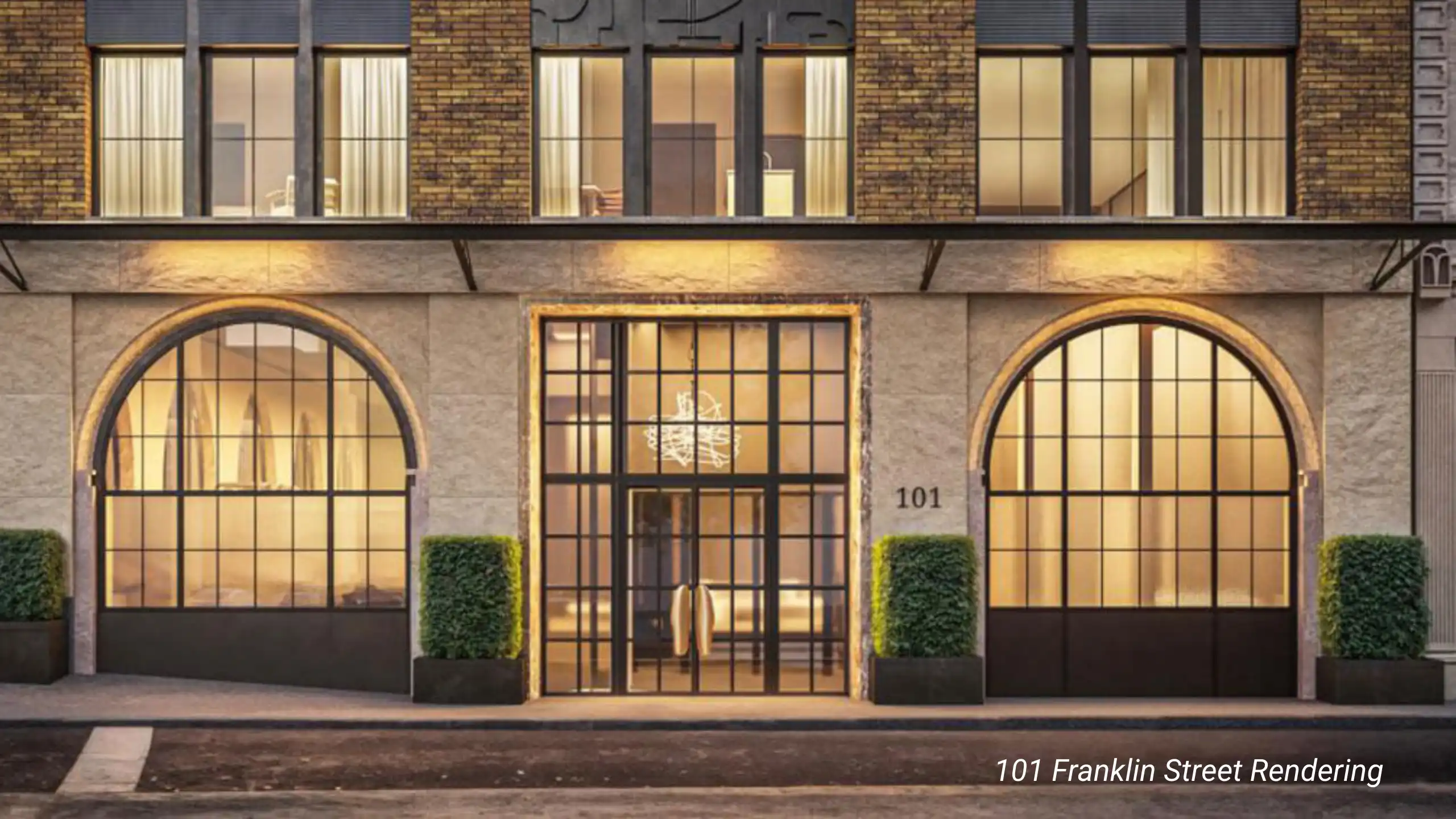
101 Franklin Street: a major office-to-condo conversion with a very Tribeca-facing redesign
101 Franklin represents one of the most common trends we’re seeing in new development: the increasing importance of conversions in downtown Manhattan.
This project would transform an existing office building into a residential condominium building, while also adding floors on top. The current plan calls for 72 condo units, retail at the base, and a substantial redesign of the building’s facade and massing.
Why does this matter? Because projects like this often feel different from ground-up construction. They can bring meaningful new housing supply to the neighborhood without starting from a vacant lot, and they are increasingly part of the story in lower Manhattan as older office buildings lose relevance.
What’s notable here is that the design has shifted away from a more generic contemporary office look toward something much more Tribeca-coded: red brick, a lighter stone base, arched lower-floor openings, and a more prewar-inspired aesthetic.
There is no announced completion date yet, but from a market perspective, this is one of the more significant future ownership projects in the area. For renters who want to stay in Tribeca long term and may eventually want to buy here, this is exactly the kind of pipeline worth watching.
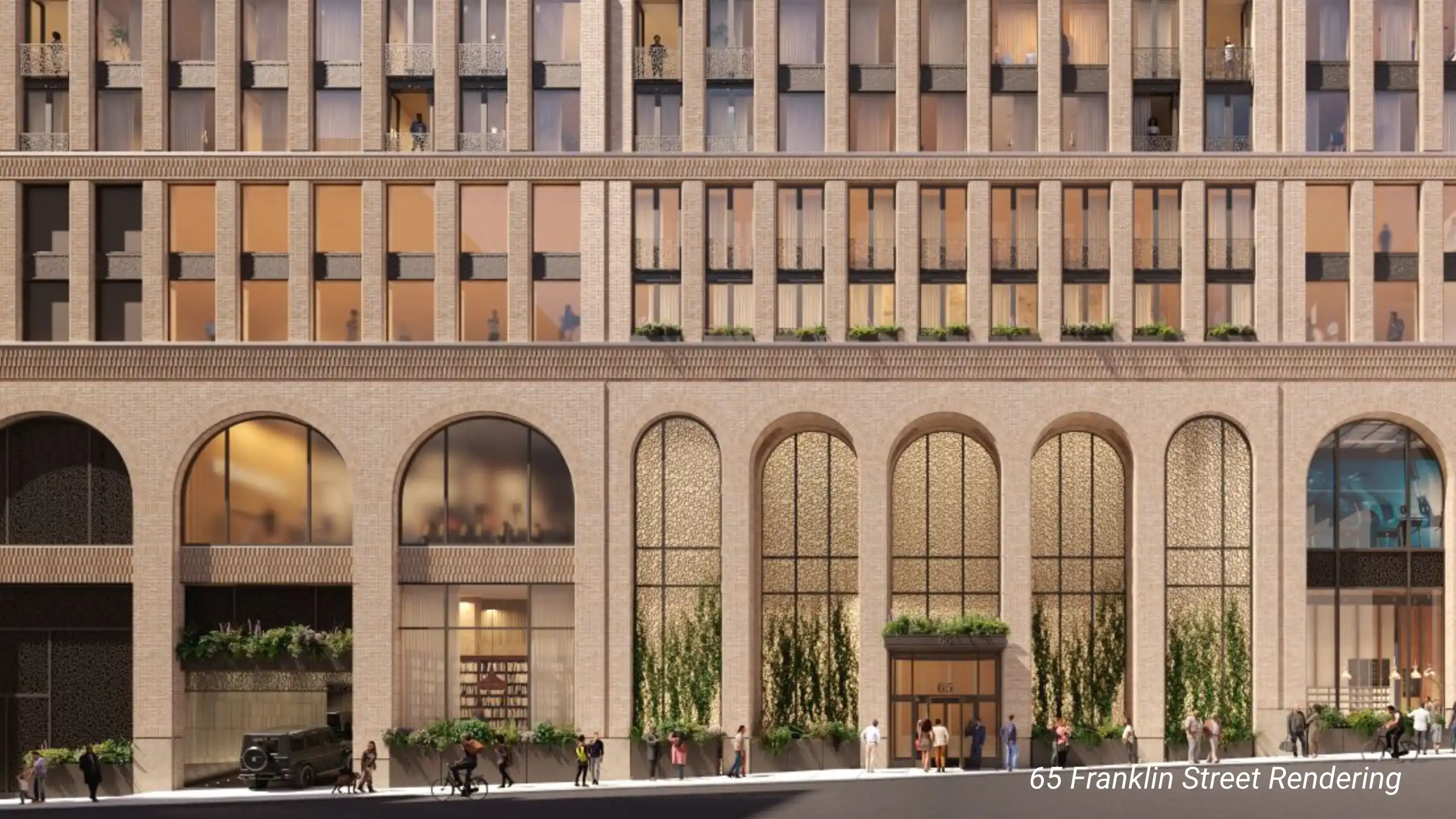
65 Franklin Street / 360 Broadway: the one to watch if you want to understand where Tribeca development is headed
Of all the projects currently in motion, 65 Franklin may be the most complicated, and the most important from a neighborhood development standpoint.
This site has already had multiple lives. It was once envisioned as a smaller condo tower, then stalled, changed hands, and came back with a much larger ambition. Depending on which filing or reporting snapshot you look at, the plans have ranged from roughly 19 stories to the high 20s, and from 77 units to well over 100, with substantial retail at the base.
That discrepancy is worth noting because it tells us something important: the project is still evolving.
What feels more settled is the broader direction. This is no longer a modest restart of an old plan. It is becoming a materially larger mixed-use development, enabled in part by transferred air rights and newer zoning flexibility. In other words, it is one of the clearest examples of how policy changes are beginning to reshape what is actually buildable in Tribeca.
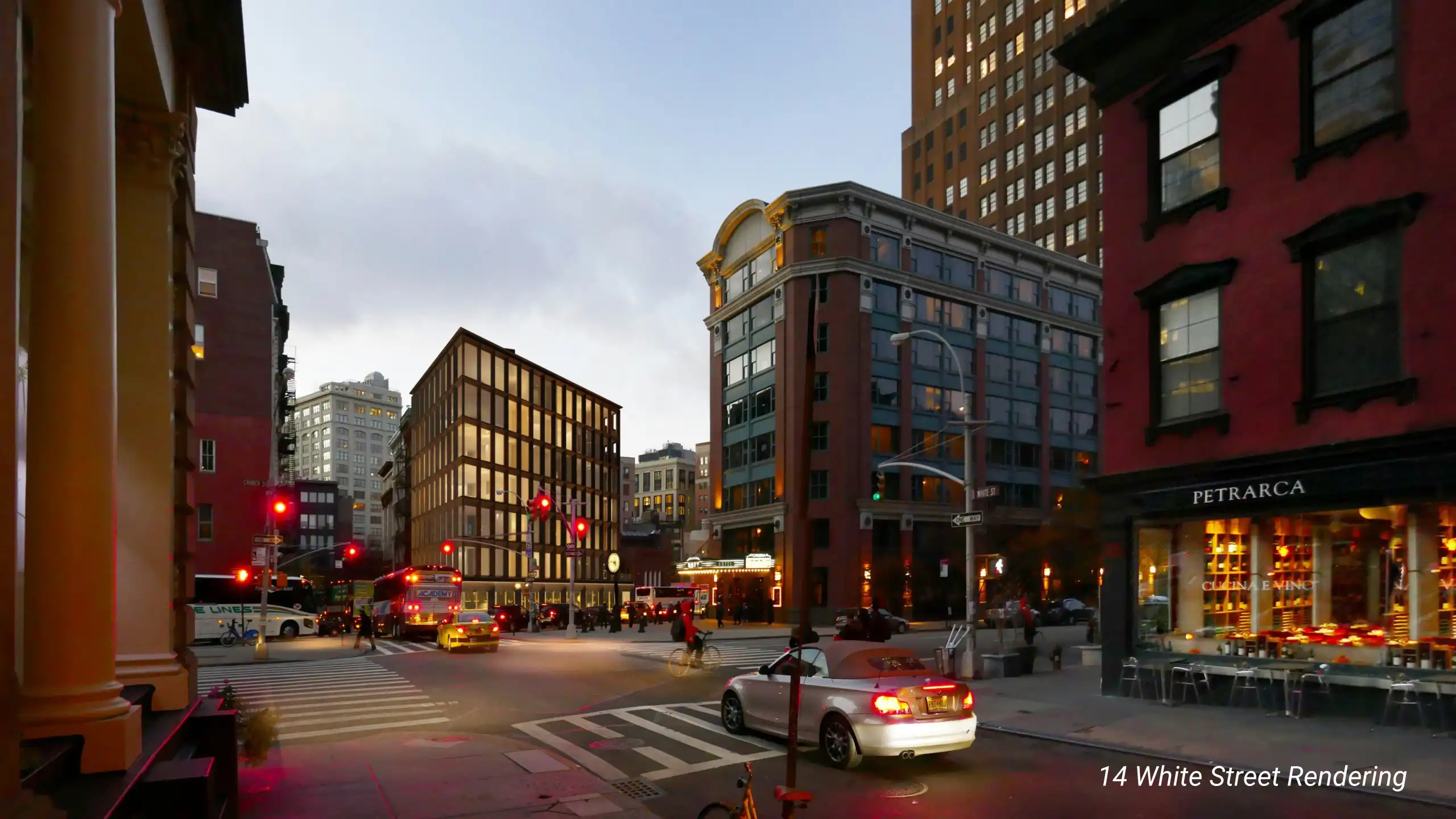
14 White Street: the boutique condo project many neighbors have been curious about
If you’ve noticed the activity around White Street near the Roxy, 14 White is one of the more interesting residential projects currently moving toward the market.
This is a very small, design-forward condominium development on a triangular site, positioned as a high-end boutique offering rather than a large-scale luxury building. The project has been described as a seven-story condo with retail at the base, though the more detailed local reporting suggests it reads more as a six-story building with a partial penthouse level above. Either way, the key takeaway is that this is intentionally intimate inventory: just seven residences above ground-floor retail.
That matters in Tribeca, where buyers often want something that feels private, architectural, and not overbuilt.
A few of the details that stand out:
- Etched bronze exterior panels
- Oversized windows, including notably tall windows facing Sixth Avenue
- Residences ranging from roughly two-bedroom layouts to larger full-floor-style homes
- Private storage, in-unit laundry, and central air
- A high-performance, energy-efficient design, with a focus on better insulation, quieter interiors, and lower overall energy use.
From a neighborhood perspective, this is the kind of project that tends to appeal to buyers who already know Tribeca well and want something quieter, more custom-built, and more design-conscious than a typical new development tower.
The most useful timeline detail so far is that, as of late 2025 reporting, the team was hoping for a certificate of occupancy in spring 2026. In other words, this is no longer just a conceptual project: it is transitioning into a real near-term inventory story.
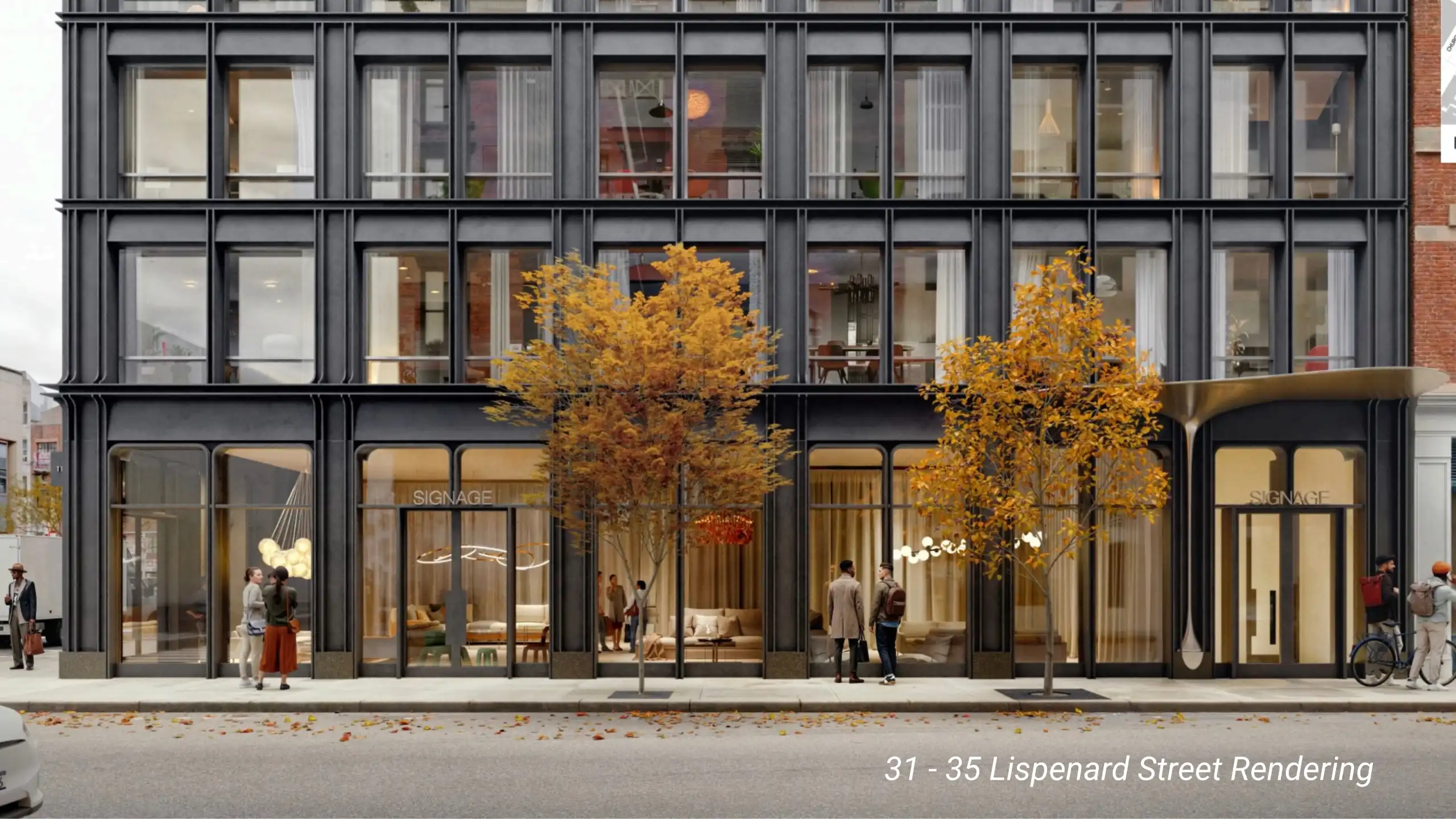
31–35 Lispenard Street: a redesigned corner building with a more contemporary look
At Church and Lispenard, a long-discussed site is back in play with a revised proposal.
The current plan combines multiple lots into one mixed-use development, replacing existing low-rise commercial buildings with a larger residential building. Recent reporting points to an approximately eight-story rental project with 19 units and ground-floor commercial space, now moving through Landmarks review.
This one is especially interesting because it reflects a pattern we see often in Tribeca: a site that has had prior approvals, sat dormant, then reemerges under new ownership with a slightly different vision and a more realistic path forward.
Architecturally, the proposal appears to be walking the line between contemporary and contextual. The design has been described with dark metal cladding, granite at the base, generous glazing at street level, and proportions intended to respond to neighboring historic buildings. Whether neighbors love it or not, the intent is clear: this is not trying to be a glassy outsider dropped into the district. It is trying, at least in its presentation, to speak to Tribeca’s cast-iron rhythm in a newer language.
For residents, the practical takeaway is simple: this corner is likely headed toward redevelopment, and the real question now is not whether it changes, but how well the final design fits the block.
What all of this means for Tribeca residents
The real question is not just what’s being built in Tribeca. It’s what these projects will mean for the people who already live here and the people who hope to stay here long term.
- Will a new building improve the block, or just change it?
- Will it bring better retail and more energy to the street?
- Will it create new opportunities for Tribeca renters who would love the chance to buy in the neighborhood without leaving it?
- And just as importantly, will it respect the scale, texture, and character that make Tribeca feel the way it does?
Those are the questions I find most interesting right now, and what I’ll be watching closely.
Because what rises behind the scaffolding ultimately shapes much more than the skyline. It shapes the experience of living here.
If you’re a Tribeca resident and you’re curious about how these projects may affect your block, your building, or your future options in the neighborhood, I’m always happy to be a resource. Whether you’re simply keeping tabs on what’s coming, considering a purchase, or thinking more strategically about your place in the market, it’s a conversation worth having, and I’m always available to chat.
Reach out to me at hdomi@heatherdomi.com, or give me a call at (917) 267-8012.
Social Cookies
Social Cookies are used to enable you to share pages and content you find interesting throughout the website through third-party social networking or other websites (including, potentially for advertising purposes related to social networking).