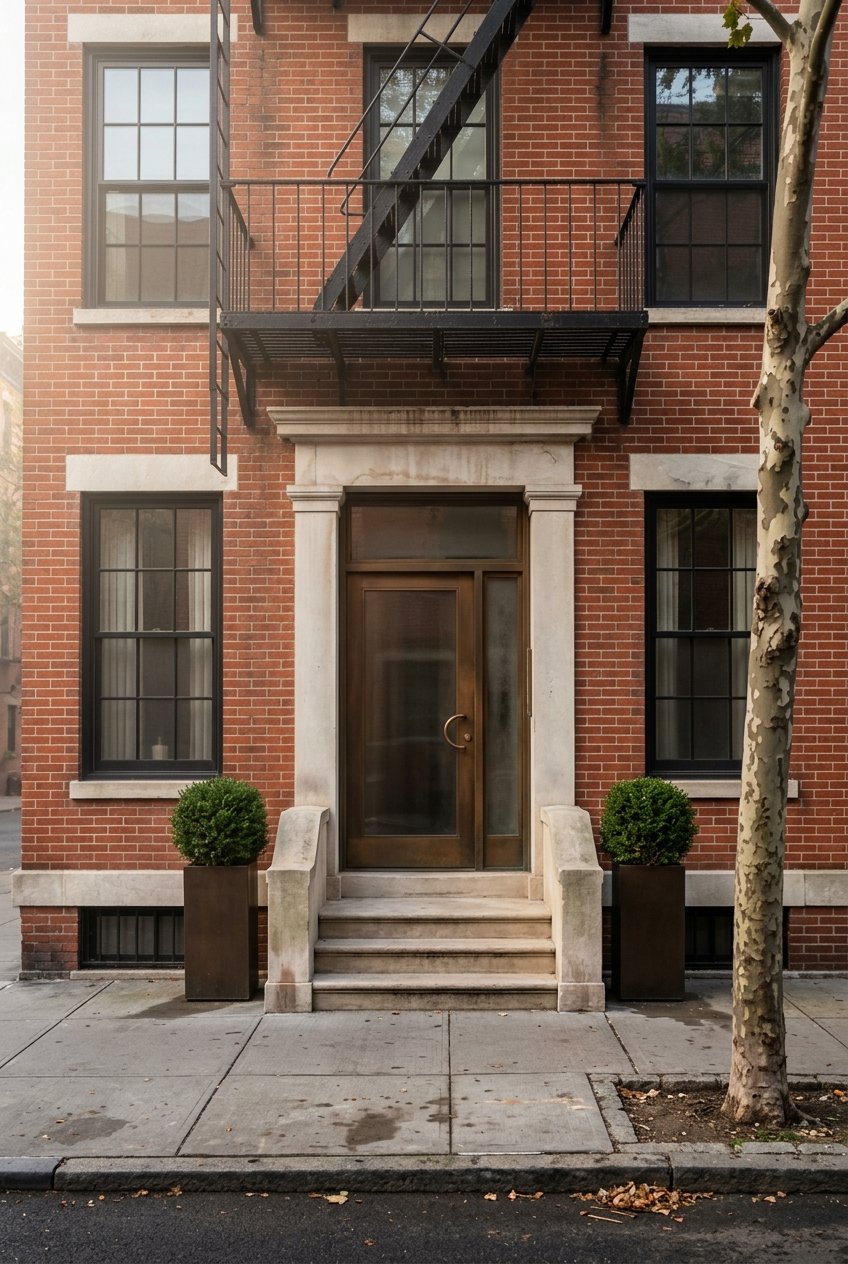
What makes the East Village feel so distinct from other Manhattan neighborhoods? For many buyers, it comes down to a rare mix of cultural energy, historic streetscapes, and everyday convenience that still feels deeply lived-in. If you are considering a move here, understanding how the neighborhood looks, moves, and sounds day to day can help you decide whether it fits the way you want to live. Let’s dive in.
East Village character
The East Village is a medium-density Manhattan neighborhood bounded by East 14th Street, Third Avenue, East Houston Street, and the East River. City sources describe it as a place shaped by history, diversity, and creative culture, with cafés, restaurants, nightlife, and independent retail contributing to a small-town-in-the-big-city feel.
That identity is not just branding. It is built into the neighborhood’s physical form, where older mixed-use buildings, active storefronts, and compact blocks still define much of the street experience. For you as a buyer, that often means a neighborhood with strong visual character and a clear sense of place.
Historic fabric shapes daily life
A major reason the East Village still feels like the East Village is its preserved streetscape. The neighborhood’s 2012 historic district designation covers roughly 325 buildings, helping protect a significant portion of its architectural character.
City planning materials note that many 19th- and early-20th-century tenement-style buildings remain intact. You will also find row houses and ground-floor retail woven throughout the area, which keeps the neighborhood feeling layered rather than newly assembled.
East Village buildings today
The housing stock here is still largely defined by older, smaller-scale buildings. Planning materials describe a predominance of four- to seven-story structures, and the broader East Village, Lower East Side, and Two Bridges area includes narrow four-story walk-ups as well as larger towers closer to the East River.
For you, this often translates into a very different residential experience than in newer Manhattan submarkets. The East Village is less about uniform full-service inventory and more about varied building types, older layouts, and block-by-block differences.
What older buildings often mean
Because much of the neighborhood is low-rise and older, homes here often come with tighter floor plates and a more compact footprint. In practical terms, you may find less excess space and fewer large-scale amenities than in newer development-heavy areas.
The appeal is often architectural texture and a stronger connection to the neighborhood’s history. If you care about streetscape, proportion, and character, that can be a meaningful advantage.
Where newer buildings appear
Newer market-rate buildings have been added over time, especially closer to the East River. These edge locations can offer a different experience from the interior blocks, with building scale and housing formats that may feel more contemporary.
That gives buyers a broader range of choices than the neighborhood’s reputation might suggest. If you want the East Village location but prefer a more modern building, the edges may be worth a closer look.
Culture at street level
One of the East Village’s biggest strengths is that its cultural life is visible in everyday routines. This is not a neighborhood where culture is tucked away behind a formal district boundary. It tends to show up right on the sidewalk, in public spaces, and in institutions that have long been part of local life.
La MaMa has been in the East Village since 1961 and describes the area as a diverse, dynamic community. Anthology Film Archives and Cooper Union also help anchor the neighborhood’s identity, making it feel like a lived-in cultural district rather than simply a residential address.
Parks and open space
In a tightly built neighborhood, open space matters. Tompkins Square Park plays an outsized role in the East Village because it offers a 10.5-acre break in the urban fabric, along with events, fitness equipment, recreation, and community programming such as farmers markets.
For many residents, the park is part of the daily rhythm of the neighborhood. It adds breathing room to an area where buildings are close to the street and most blocks feel active and compact.
East River Park changes
The waterfront is also evolving. New York City says East River Park is being rebuilt as part of the East Side Coastal Resiliency project, with large sections opened in 2025 and the park being raised 8 to 10 feet higher for flood protection.
That matters if you are looking at the eastern edge of the neighborhood. Over time, these changes may shape how residents use the waterfront and how buyers think about access, open space, and resilience.
Transit and getting around
Transit access is one of the East Village’s most practical advantages. MTA documents show L train service at 1st Avenue and 3rd Avenue, 6 train service at Astor Place, and access to the 14th Street complex with L, F/M, and 1/2/3 connections nearby.
Bus coverage is also strong. Routes serving East Village destinations include the M1, M2, M8, M14A-SBS, M14D-SBS, M101, and M102, with the M14D running across 14th Street and stopping at Avenue C, Avenue B, Avenue A, 1st Avenue, 2nd Avenue, and 3rd Avenue.
Why transit affects lifestyle
Strong subway and bus access supports the neighborhood’s active street life. It also makes the East Village a practical choice if you want to move around Manhattan without depending on a car.
For many buyers, this convenience is part of the value equation. You may be trading larger living space for a location where daily errands, dining, transit, and culture are close at hand.
The noise and space trade-off
Every neighborhood has trade-offs, and in the East Village they are fairly clear. The same active ground-floor retail, restaurant scene, nightlife, and transit access that make the area appealing can also create more ambient noise, more foot traffic, and more late-evening activity on busier corridors.
That does not mean every block feels the same. Side streets and edge conditions can vary, but it is reasonable to expect a livelier environment than in quieter parts of Manhattan.
Space versus location
The other trade-off is size. Because so much of the neighborhood is older, low-rise, and built on compact lots, the East Village often rewards buyers who prioritize walkability, neighborhood energy, and character over raw square footage.
That can make it a strong fit for a first Manhattan purchase or a downtown pied-à-terre. It may be a less natural fit if your top priorities are oversized rooms, a quieter setting, or a more separated residential feel.
Who the East Village suits best
The East Village often appeals to design-aware buyers who want a neighborhood with visible history and a strong daily rhythm. If you value older architecture, active streets, and access to culture and transit, the neighborhood can offer a compelling Manhattan experience.
It also suits buyers who are comfortable making thoughtful trade-offs. In this part of Manhattan, the right purchase is often less about checking every box and more about choosing the combination of block, building, and layout that best matches how you actually live.
How to evaluate an East Village purchase
If you are seriously considering the East Village, it helps to evaluate each opportunity in context rather than relying on neighborhood shorthand. Buildings can vary widely by age, scale, location, and feel, even within a short walking distance.
A disciplined search should look closely at:
- The exact block and surrounding commercial activity
- Building type, including walk-up versus larger elevator or waterfront buildings
- Layout efficiency and how the apartment lives day to day
- Proximity to Tompkins Square Park, transit, and neighborhood institutions
- Your tolerance for noise, foot traffic, and a more active street environment
In a neighborhood this layered, precision matters. The right fit usually comes from matching the property to your routine, not just the address to your wishlist.
If you are weighing whether the East Village fits your goals, the right guidance can help you separate broad reputation from block-by-block reality. The Heather Domi Team brings candid Manhattan advice, strategic judgment, and deep experience across co-op, condo, townhouse, and complex urban purchases.
FAQs
What is daily life like in the East Village?
- Daily life in the East Village is shaped by active streets, cafés, restaurants, nightlife, independent retail, cultural institutions, and regular use of public spaces like Tompkins Square Park.
What types of buildings are common in the East Village?
- The East Village is still largely defined by older four- to seven-story buildings, including many tenement-style structures, row houses, walk-ups, and some newer buildings closer to the East River.
Is the East Village a good fit for buyers who want space?
- The neighborhood often involves a trade-off, since many homes are in older, compact low-rise buildings, so buyers who prioritize location, character, and walkability may find a better fit here than buyers focused on oversized rooms.
How easy is it to get around from the East Village?
- Transit access is one of the neighborhood’s strengths, with nearby L and 6 train service, connections at the 14th Street complex, and multiple bus routes serving East Village destinations.
What role does Tompkins Square Park play in East Village living?
- Tompkins Square Park provides 10.5 acres of open space, recreation, events, fitness equipment, and community programming, making it an important part of the neighborhood’s daily rhythm.
Are newer buildings available in the East Village?
- Yes, newer market-rate buildings have been added over time, especially closer to the East River, offering a more contemporary option within the broader neighborhood.