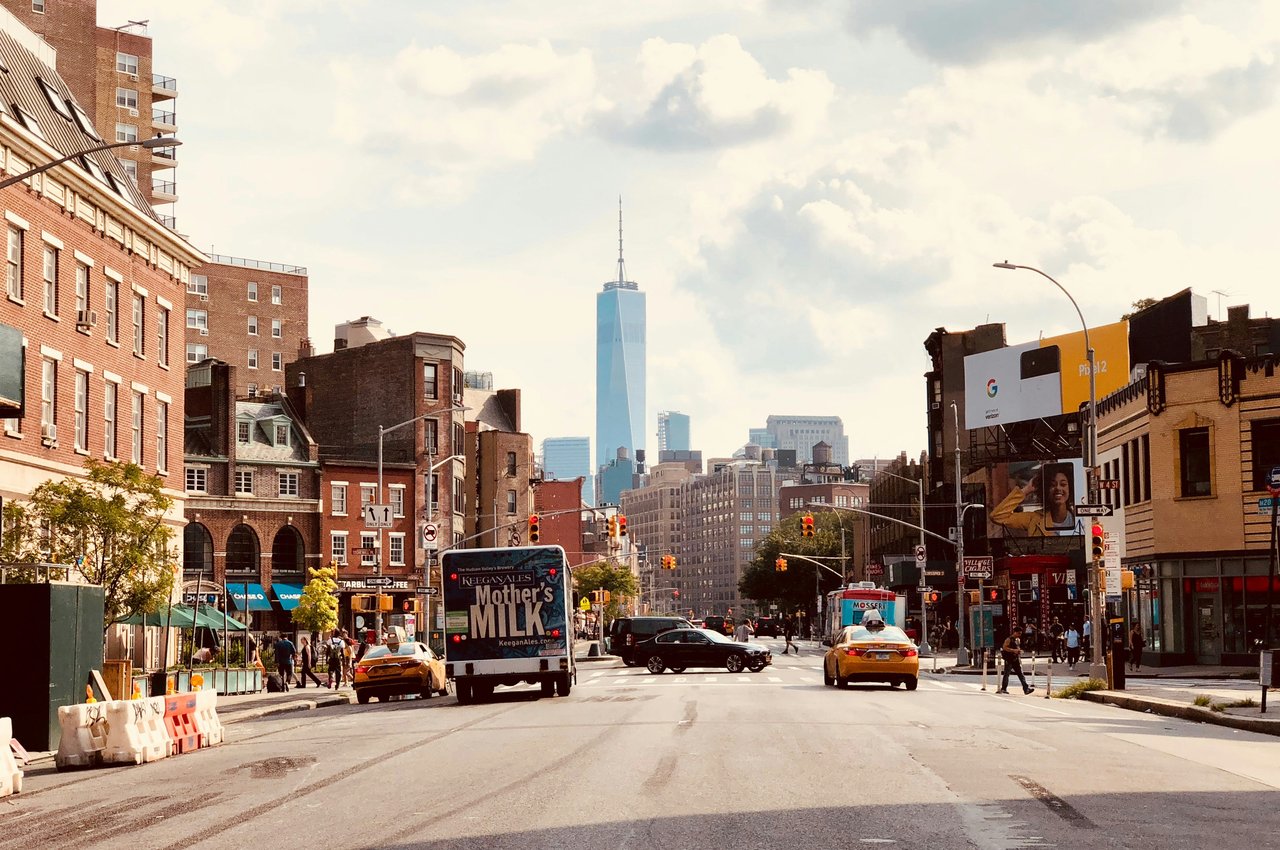
They share a history, a name, and some of Manhattan's most recognizable streets. But spend time in each, and you'll discover two very different ways of experiencing New York.
Ask a New Yorker where Greenwich Village ends and the West Village begins, and you might get a few different answers.
Some will tell you Sixth Avenue is the dividing line. Others consider the West Village simply the western half of Greenwich Village. And historically, that second answer is correct. The West Village is part of the larger Greenwich Village neighborhood, even though the two have developed distinct identities over time.
But walk from Washington Square Park toward the Hudson River, and the distinction becomes easier to understand.
Around Washington Square, there's a constant exchange of people and ideas. Students cross the park between classes, musicians gather near the fountain, and the streets around MacDougal and West 3rd are busy well into the evening.
Continue west past Sixth Avenue, and the city begins to feel different. The streets become narrower and less predictable. Townhouses sit behind iron railings, small restaurants occupy former residential storefronts, and you can turn a corner onto a block that feels surprisingly removed from the activity just a few minutes away.
Both neighborhoods have the history, architecture, and cultural character that make downtown Manhattan so appealing. The interesting part is how differently those qualities shape everyday life.
First, a Little Geography
Greenwich Village predates Manhattan's familiar street grid.
Before the Commissioners' Plan of 1811 established the numbered streets and avenues that define much of Manhattan, Greenwich was a separate settlement north of the city's densely developed southern tip. Its roads followed older property lines, waterways, and routes connecting farms and estates.
As the city expanded north, the Village retained much of its earlier street pattern. That's why West 4th Street famously intersects West 10th Street, something that would make little sense almost anywhere else in Manhattan.
Today, the distinction between Greenwich Village and the West Village is partly a matter of convention.
In real estate and everyday conversation, Greenwich Village often refers to the area east of Sixth Avenue, centered around Washington Square Park, University Place, and lower Fifth Avenue. The West Village generally describes the residential streets west of Sixth Avenue toward the Hudson River.
The boundaries aren't universally agreed upon, and both areas share the broader Greenwich Village history. But the division is useful when describing how the neighborhood changes as you move west.
Greenwich Village: The Cultural Heart
If Greenwich Village has a recognizable center, it's Washington Square Park.
The park began as a potter's field in the late 18th century before becoming a military parade ground in 1826 and, eventually, the public square we know today. The marble Washington Square Arch, designed by Stanford White and completed in 1892, became one of the neighborhood's defining landmarks.
By the 19th century, the streets surrounding the square had developed into a fashionable residential district. The Greek Revival townhouses along Washington Square North remain a reminder of that period, when prominent New York families lived overlooking the park.
The neighborhood's identity changed considerably in the decades that followed.
Artists, writers, musicians, and political activists made Greenwich Village a center of American cultural life. The area became associated with the Beat movement in the 1950s and the folk music revival of the 1960s. Bob Dylan, Joan Baez, and Allen Ginsberg were among the figures connected to its coffeehouses, clubs, and public spaces.
That history remains part of the neighborhood's everyday atmosphere.
The Blue Note on West 3rd Street continues the Village's jazz tradition. Cafe Wha? on MacDougal Street occupies a place in its musical history. The Comedy Cellar, small theaters, bookstores, and independent shops contribute to a cultural scene that extends well beyond Washington Square.
New York University's presence adds another layer. The university has occupied space around Washington Square since the 1830s, and today its students, faculty, and academic buildings are a defining part of the surrounding streets.
There's a particular energy to this part of Greenwich Village. The park functions almost like a public living room, while the restaurants, performance spaces, and university create activity throughout the day.
For people who enjoy being surrounded by the cultural life of the city, that atmosphere is a significant part of the appeal.
The West Village: A More Intimate Version of Manhattan
Cross Sixth Avenue and head toward Bedford, Perry, Charles, or Jane Street, and you'll find a different kind of neighborhood.
The West Village is known for its irregular streets, low-rise buildings, and remarkably intact residential blocks. Its scale feels unusual for Manhattan, particularly when compared with the broad avenues and taller apartment buildings just a short distance away.
Part of that character comes from the neighborhood's early development.
During the first half of the 19th century, Greenwich Village grew as a residential community, attracting merchants, tradespeople, and families seeking homes outside the crowded city farther south. Rows of Federal-style and Greek Revival houses appeared along streets that still followed the area's older geography.
Many of those buildings remain.
Commerce Street curves through one of the neighborhood's most picturesque sections. Grove Street passes the historic Grove Court houses, tucked behind a gated entrance. On Bedford Street, the narrow townhouse at number 75 is a reminder of how varied the neighborhood's building lots have always been.
The West Village also has its own extraordinary cultural history.
The Stonewall Inn on Christopher Street was the site of the 1969 uprising that became a defining moment in the modern LGBTQ rights movement. Christopher Park and the surrounding streets are now part of Stonewall National Monument, designated in 2016.
Nearby, the Village Vanguard has been a fixture on Seventh Avenue South since 1935, while the Cherry Lane Theatre has been associated with the neighborhood's experimental theater tradition for more than a century.
What makes the West Village distinctive today is the way this history sits alongside a largely residential environment.
A quiet townhouse block can be just around the corner from one of the city's most sought-after restaurants. Bleecker Street is busy with shopping and dining, while nearby side streets can feel almost secluded.
And at the western edge, Hudson River Park adds something the area around Washington Square doesn't have: direct access to the waterfront.
For residents, that can mean morning runs along the Hudson, sunset walks, or simply having the river within a few blocks of home.
Two Different Ways to Spend a Saturday
One of the easiest ways to understand the difference between the neighborhoods is to imagine an ordinary Saturday.
In Greenwich Village, you might start with coffee near Washington Square, walk through the park, browse a bookstore, and spend the afternoon around MacDougal Street or lower Fifth Avenue. There are always people coming and going, and the neighborhood's university and cultural institutions give it a lively, public atmosphere.
In the West Village, the day might begin with a walk along the Hudson, followed by breakfast at a neighborhood café and a few stops along Bleecker Street. You could spend an hour browsing Three Lives & Company on West 10th Street, pick up something from Murray's Cheese, or meet friends for dinner at Via Carota.
Of course, these experiences overlap. You can find quiet residential streets east of Sixth Avenue and some of downtown's busiest restaurants in the West Village.
The distinction is more about the rhythm of the surrounding blocks.
Greenwich Village has a strong sense of public life, shaped by the park, university, and cultural institutions. The West Village often feels more residential between its busy commercial corridors, with smaller streets and a closer connection to the waterfront.
And because they're so close, residents of either neighborhood can easily enjoy both.
The Architecture Tells Another Story
The differences become particularly interesting when you look at the homes.
Around Washington Square and lower Fifth Avenue, Greenwich Village offers a remarkable collection of historic townhouses and distinguished apartment buildings.
The stretch of Fifth Avenue north of Washington Square, often called the Gold Coast, is known for its prewar cooperative buildings. Addresses such as One Fifth Avenue and the apartment houses along lower Fifth represent a period when elegant apartment living became an important part of the neighborhood's identity.
Elsewhere, you'll find Federal-era houses, Greek Revival townhouses, smaller prewar buildings, and postwar cooperatives.
The West Village has a different residential profile.
Townhouses, walk-ups, and smaller apartment buildings dominate many of the interior streets. Individual properties can be wonderfully distinctive, with original fireplaces, unusual layouts, private gardens, and architectural details that reflect generations of alterations.
The neighborhood also has a growing collection of contemporary luxury condominiums, particularly toward the Hudson. Developments such as 150 Charles Street, The Greenwich Lane, and 160 Leroy introduced larger residences and modern amenities into an area historically defined by smaller buildings.
That creates an interesting choice for buyers.
Someone drawn to the architectural pedigree of a prewar cooperative overlooking lower Fifth Avenue may have very different priorities from someone seeking a townhouse on Perry Street or a contemporary condominium near the Hudson.
And in both neighborhoods, historic architecture comes with practical considerations. Older buildings can have smaller rooms, less conventional floor plans, limited elevator access, and renovation restrictions.
The character that makes these properties appealing is often inseparable from the compromises involved in owning them.
Why So Much of the Village Still Looks the Same
There's another reason these neighborhoods feel so different from much of Manhattan: preservation.
In 1969, New York City designated the Greenwich Village Historic District, protecting more than 2,200 buildings across approximately 65 blocks.
The district encompasses significant portions of both Greenwich Village and the West Village, preserving an extraordinary collection of 19th- and early-20th-century architecture.
The designation followed years of neighborhood activism, including efforts to protect Washington Square Park from proposed roadways and resist large-scale redevelopment.
Jane Jacobs, who lived in the West Village, became one of the most influential voices in these debates. Her understanding of city life emphasized the value of mixed uses, short blocks, older buildings, and the everyday interactions that make neighborhoods function.
Walk through either part of the Village today, and many of those ideas are visible in the streets themselves.
Historic preservation has helped maintain the scale and architectural character of the neighborhood, although it also limits opportunities for new construction and can make renovations more complicated.
That scarcity is part of the residential story. Buyers searching for a particular townhouse, a spacious prewar apartment, or a modern condominium often have relatively few comparable options available at any given time.
So Which Village Feels More Like Home?
I think the appeal of these two neighborhoods comes down to the kind of New York experience you want outside your front door.
Greenwich Village offers the energy of Washington Square, the intellectual and artistic life surrounding NYU, and a residential landscape that includes some of Manhattan's most distinguished prewar buildings.
The West Village offers winding streets, intimate residential blocks, historic townhouses, exceptional dining, and the ability to reach the Hudson River in minutes.
Both have extraordinary histories. Both have been shaped by artists, activists, preservationists, and generations of New Yorkers who cared deeply about their neighborhood.
And both have managed to retain much of their character despite enormous changes in the city around them.
If you're deciding between the two, I'd suggest spending time on the residential streets rather than judging either neighborhood by its busiest destinations. Walk through Washington Square on a weekday morning, explore the blocks around lower Fifth Avenue, then head west toward Perry, Charles, and Jane Streets.
Pay attention to the buildings, the traffic, the shops you would actually use, and how the streets feel at different times of day.
The distance between Greenwich Village and the West Village is only a few blocks in places. But those blocks can make a meaningful difference in how you experience living in New York.