Over the past five decades, the primary bathroom has undergone a radical transformation. What was once a purely functional, utilitarian space is now a luxurious, personalized retreat—often rivaling the spa experiences found at five-star resorts.
From the carpeted floors of the '70s to the voice-activated steam showers of 2026, each decade has reflected our changing views on wellness, technology, and luxury. Whether you’re planning a renovation to increase your NYC home's resale value or you simply love design history, here is how the primary bathroom has evolved over the last half-century.
1970s: Bold Color and Loud Personality
In the ’70s, "bold" was an understatement. This era was defined by a playful, unapologetic, expressive aesthetic.
-
The Palette: Avocado green, harvest gold, and mustard yellow.
-
Key Features: Vibrant, loud tile patterns (floral and geometric), laminate countertops, and colored porcelain tubs.
-
The Vibe: High-energy and experimental—a far cry from today’s quiet minimalism.
1980s: The Rise of the "Personal Sanctuary."
The ’80s saw the bathroom transition from a room you had to use to a room you wanted to be in.
-
The Palette: Pastel pinks, dusty blues, and neutral mauves.
-
Key Features: This was the decade of the Jacuzzi tub and the oversized vanity. It also marked the grand debut of marble and granite as standard luxury materials.
-
The Vibe: Opulence and scale.
1990s: Earth Tones and Functional Luxury
In the ’90s, the "spa-inspired" trend began to take root. Layouts became more sophisticated as homeowners prioritized comfort and convenience.
-
The Palette: Earthy beiges, hunter greens, and terracotta.
-
Key Features: Separate tubs and glass-enclosed showers became the gold standard. Double vanities became a "must-have" for couples, and recessed lighting replaced the "Hollywood" bulb strips.
-
The Vibe: Tranquil, nature-inspired, and grounded.
2000s: The Open-Concept Modern Spa
The turn of the millennium brought a focus on "airiness." The goal was to make the bathroom feel like an extension of the primary suite.
-
The Palette: Slate grays, whites, and cool stone tones.
-
Key Features: Frameless glass shower enclosures, rain showerheads, and the heavy use of natural stone like travertine.
-
The Vibe: Sleek, textured, and architectural.
2010s: High-Tech Minimalism
The 2010s were all about "clean." Designers stripped away the excess, focusing on high-quality finishes and the first wave of smart integration.
-
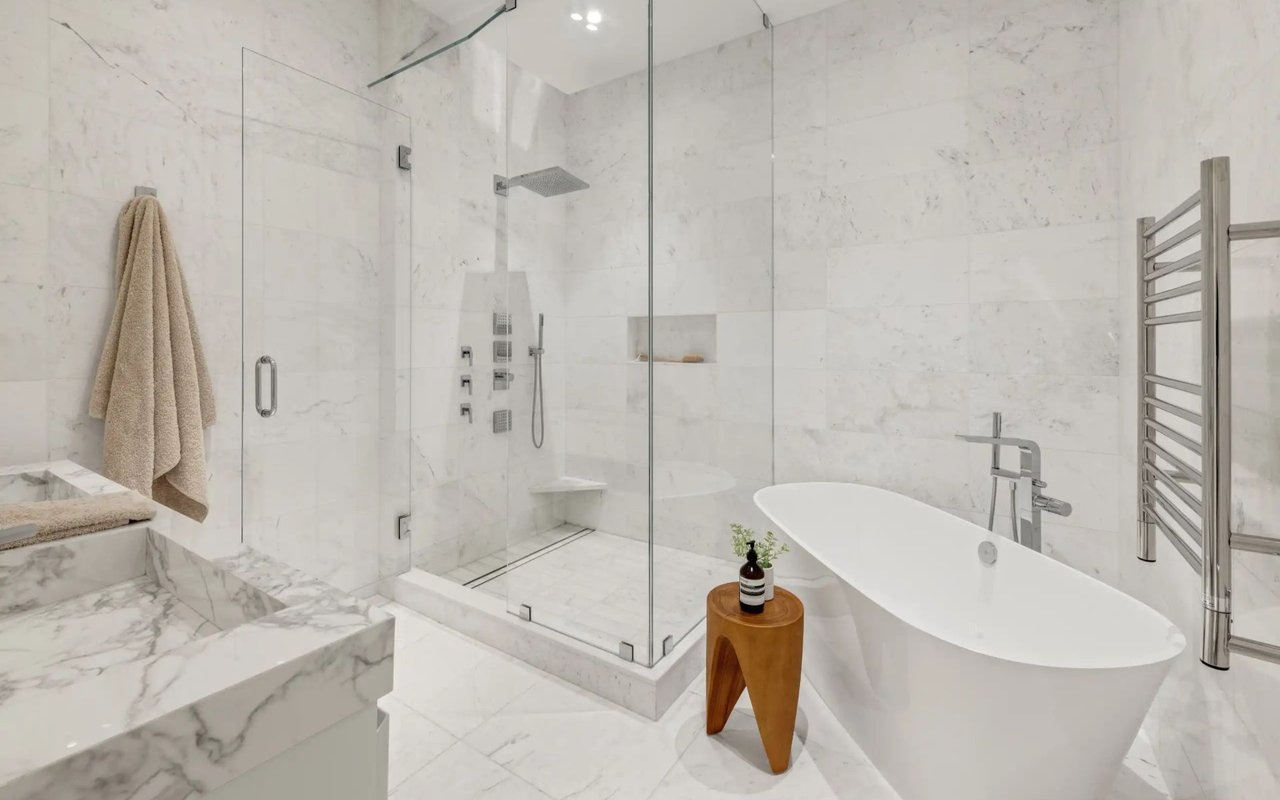
The Palette: The "All-White" bathroom and the "Greige" movement.
-
Key Features: Freestanding "soaker" tubs became the focal point. Digital shower controls and integrated LED lighting started appearing in high-end NYC residences.
-
The Vibe: Futuristic, hygienic, and streamlined.
2020s & Today: Sustainability, Wellness, and Bespoke Design
Today’s luxury bathrooms are about emotional resonance. We’ve moved past the "sterile" look of the 2010s into a period of high-end personalization.
-
The Palette: A return to saturated, moody colors—deep blues, forest greens, and even black marble.
-
Key Features: Voice-activated lighting, temperature-controlled floors, and eco-conscious, low-flow, high-performance fixtures.
-
The Vibe: Wellness-centric. The bathroom is now a recovery zone featuring infrared saunas and aromatherapy-infused steam.
The Real Estate Perspective: Why It Matters
In the New York City market, the primary bathroom is one of the highest-return areas for renovation. A bathroom that feels dated—whether it’s stuck in the '90s beige era or the '70s avocado era—can significantly devalue a property.
Conversely, a bathroom that successfully blends timeless stone with modern smart tech can be the deciding factor in a competitive bidding war.
Thinking of Renovating Before You Sell?
Knowing which trends are "timeless" and which are "temporary" is the key to protecting your investment. If you’re considering a renovation and want to know what NYC buyers are currently looking for, let’s chat.