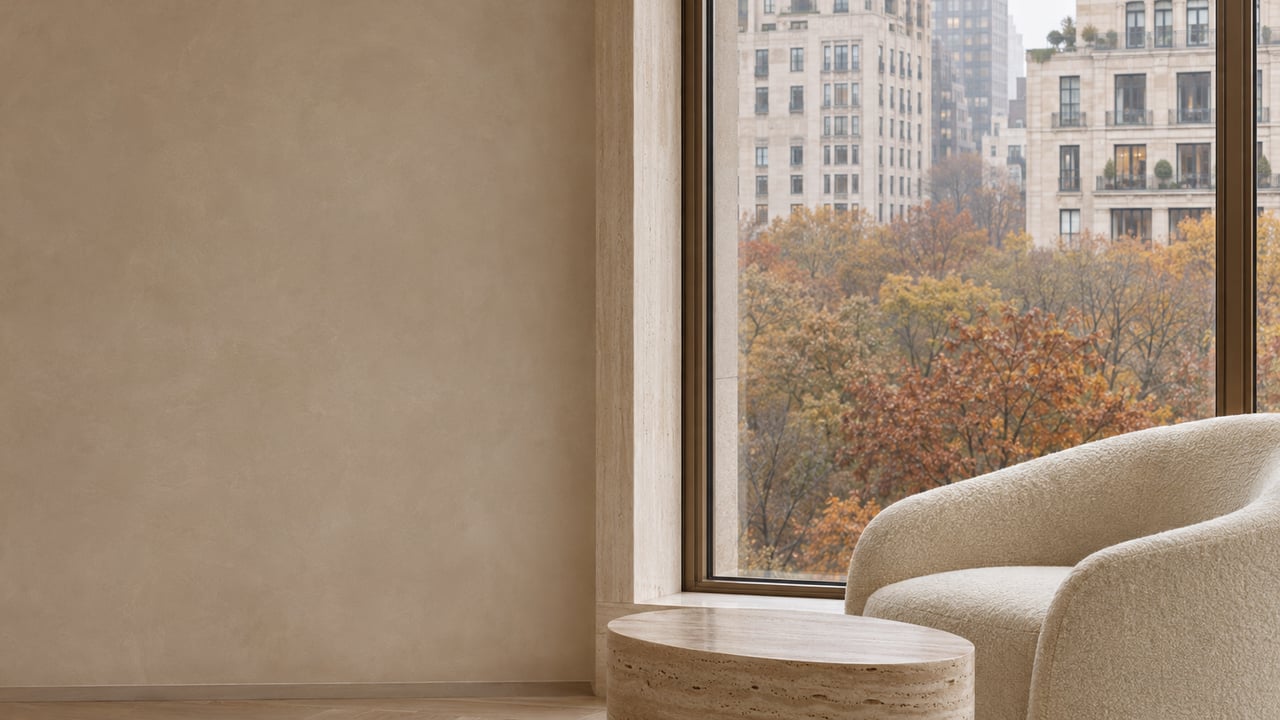
In the last week of August, Unit 68E at Central Park Tower went to contract with an asking price of $20.5 million. It is a three-bedroom of more than 3,100 square feet with 11-foot ceilings and park-facing glass. When Extell began marketing the tower from floor plans in 2018, it asked nearly $25 million for that apartment, The Real Deal reported. Seven weeks later and a few hundred feet away, Unit 36B at 220 Central Park South sold off-market for $34.3 million. Vornado first sold that unit in 2019 for just under $22 million, and it resold in 2021 for $23 million, according to The Real Deal's reading of public records.
Both apartments face Central Park. Both sit in what the market calls Billionaires' Row. One is changing hands at about 18 percent below its first asking price. The other has gained roughly half its value over seven years. Every buyer here pays for the corridor's name, but the corridor does not set the price. Each tower carries its own resale history, those histories have stayed far apart into 2026, and the building a buyer picks decides the likely exit more than the street address does.
The first resales sorted the towers
The clearest record comes from a Real Deal analysis of public records published in August 2025. It compared the original sponsor price of each unit with the price the first owner got on resale, in five buildings. These are the average results for first resales recorded through mid-2025:
| Building | Average first-resale change vs. sponsor price |
|---|---|
| 220 Central Park South | +43% |
| 432 Park Avenue | about +2% |
| Central Park Tower, 217 West 57th | -9.7% |
| 111 West 57th | -16.6% |
| One57, 157 West 57th | -24.2% |
The figure for 220 Central Park South includes one penthouse bought for $93 million in 2019 and resold in 2022 for about $188 million. Leave that sale out and first resales there still averaged 36 percent above the sponsor price. As of that analysis, no first-time seller in the building had taken a loss. One57 sits at the other end. After its first two resales, 32 of the next 35 resales by original owners closed below what those owners had paid.
Individual trades show the gap in dollars. One buyer resold three units at 220 Central Park South in 2025. Unit 45A went from $75 million to $82.5 million, Unit 44B from $26.8 million to $36.5 million, and Unit 19B from $5 million to $6.3 million. Together the three sold for $18.5 million more than they cost, The Real Deal reported in October. Elsewhere on the corridor in 2025, Unit 120 at Central Park Tower resold for $39.5 million in June 2025, after a $45.5 million sponsor purchase the previous December, per The Real Deal. Also in June 2025, an apartment at 111 West 57th bought for $26 million in 2022 sold for $20.4 million.
2026 has kept the same order
The averages above are a 2025 snapshot. This year's deals show the same split, and they also show where the adjustment is now happening.
At 220 Central Park South, the October sale of 36B fits the building's record. The Real Deal noted that without a listing it is unclear how much of the premium reflects renovation, and that the price is in line with other trades in the tower.
At Central Park Tower, the developer has been signing contracts all year below its original offering prices. Unit 82E went to contract in the last week of January asking $26.7 million, against $34.5 million in the offering plan, per The Real Deal. The full 113th floor followed in the first week of July, last asking $54.9 million after first being marketed at $63 million in 2018, The Real Deal reported. Then came 68E in late August. Measured against each unit's first asking price, those contracts run from about 13 percent lower to about 23 percent lower.
At 111 West 57th, the duplex penthouse PH76 went to contract in mid-April at a $45 million ask. Its first marketing price was roughly $55 million. The Real Deal described it as the second-to-last remaining condo in the tower and said the remaining quadplex was asking $98 million, down from its first price of $110 million.
These Central Park Tower and 111 West 57th figures are asking prices at the time of contract. Closing prices can differ.
Why a sponsor's price cut reaches the owners down the hall
In a tower where the developer is still selling, a resale owner is competing with the sponsor. The sponsor has the same floor plans, the same amenity floor and, at Central Park Tower, the same 100th-floor lounge and pools. Each sponsor contract signed below the 2018 price becomes the most recent comparable a resale buyer will cite. That helps explain why the first-resale averages at Central Park Tower and 111 West 57th came in negative while sponsor units were still on offer.
Appraiser Jonathan Miller told The Real Deal that the corridor's premise "was based on a mistaken assumption that the market was wide enough and deep enough for a lot of buildings to come on simultaneously." Several towers chasing the same small pool of buyers at once tends to push down the price of whichever product is in surplus. On 57th Street, that product was new, unsold supertall inventory. In the same article, a broker described the buyer's instinct more plainly: "everyone wants new, fresh, clean and improved amenities." The analysis tied One57's results partly to newer towers that rose above it and drew buyers away.
The comparison has one more wrinkle. Donna Olshan told The Real Deal that a sponsor may hold its headline price while making "a lot of givebacks at the end of the deal," and that "very often, the price that's recorded is not the actual price." The publication's example was the top penthouse at 432 Park Avenue, which recorded at $88 million in 2016 after the co-developer gave the buyer a $56 million loan. When the recorded starting price is inflated, a resale "loss" measured against it can look larger on paper than what the first owner actually gave up.
What the record means for someone buying in 2026
At Central Park Tower, the markdown that One57's first owners absorbed when they resold, an average of 24.2 percent, is roughly the size of the cut the developer took on 82E before anyone moved in. A buyer signing at today's sponsor prices starts from a cost basis that already reflects years of the discounting that hurt earlier owners. A buyer at 220 Central Park South pays a price that has risen through every recorded resale. That buyer is betting the building's record continues, without a sponsor discount as a cushion.
Neither is wrong. They are different bets, and the resale table shows which kind each building has been. Kane Manera, who leads sales at Central Park Tower, told The Real Deal that for any purchase, "ideally you want something over five or seven years." That advice matters most in towers where sponsor inventory is still setting the comparables, because the resale market there firms up only after the developer stops undercutting it.
The broader trophy market gives this some context. Buyers signed contracts on 218 Manhattan properties asking $10 million or more between January 1 and the end of August 2026, up from 202 in the same period of 2025, according to the weekly luxury contract data The Real Deal cited. Across Manhattan, Corcoran's July 2026 market data showed condo contracts signing an average of 3.1 percent below last asking price. Demand at the top is steady. It is just not spread evenly across the towers.
For a buyer comparing these buildings, the resale history of the specific tower and line belongs beside the sponsor's price changes on comparable units. Our new development coverage and buyer's guide explain how we weigh a sponsor unit against a resale. Owners in these towers can read our notes on what happens when a Manhattan listing is overpriced.
FAQ
Are the 2026 Central Park Tower and 111 West 57th figures sale prices? No. They are the last asking prices when each contract was signed, as reported in weekly contract coverage. The recorded closing prices can come in lower or higher.
Is One57's resale record current? The building-wide average of -24.2 percent comes from the August 2025 analysis. Some named One57 trades are older. Penthouse 88, for example, sold for $47.8 million in 2015 and resold for $31.5 million in 2023, per The Real Deal. Read it as history that shapes the building's reputation, not as today's price.
Does 220 Central Park South's record guarantee future gains? No record does that. What it shows is that, through the sales recorded so far, first-time sellers there have resold above the sponsor price, and the October 2026 sale of 36B continued that pattern.
If you are weighing a supertall sponsor unit against a resale on Central Park South, the Heather Domi Team can go through the record line by line with you, including the recorded trades, the sponsor's price changes and what a realistic exit looks like for your timeline. Schedule a consultation.