Battery Park City is for buyers who want a calm, residential waterfront in a part of Manhattan known for almost everything but calm.
These are buyers who prioritize outdoor space, river views, and a quieter daily pace over the density and street life of the rest of lower Manhattan. The neighborhood was planned as a residential community from the start, and it functions as one. Wide esplanades, parks, and ballfields run the length of the waterfront. The buyers who choose it tend to value that open space highly enough to accept the trade-offs that come with the neighborhood's location and its ownership structure.
Buyers who want a dense restaurant and nightlife scene, historic residential buildings, or a straightforward fee-simple purchase should understand the neighborhood's limits before they commit.
Battery Park City occupies the southwestern edge of Manhattan, west of West Street, running from roughly the Financial District south to Battery Park. The neighborhood sits on ninety-two acres of landfill, much of it excavated during the original construction of the World Trade Center.
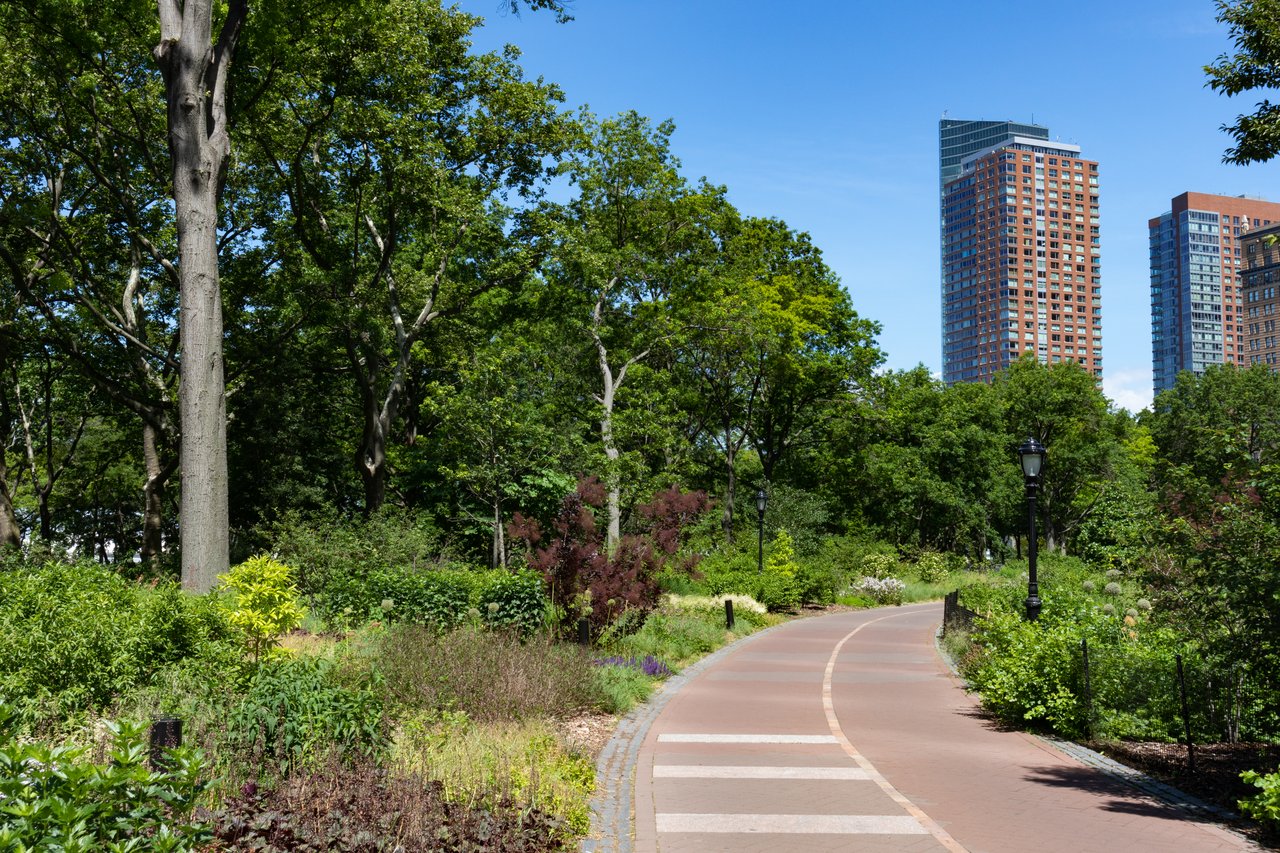
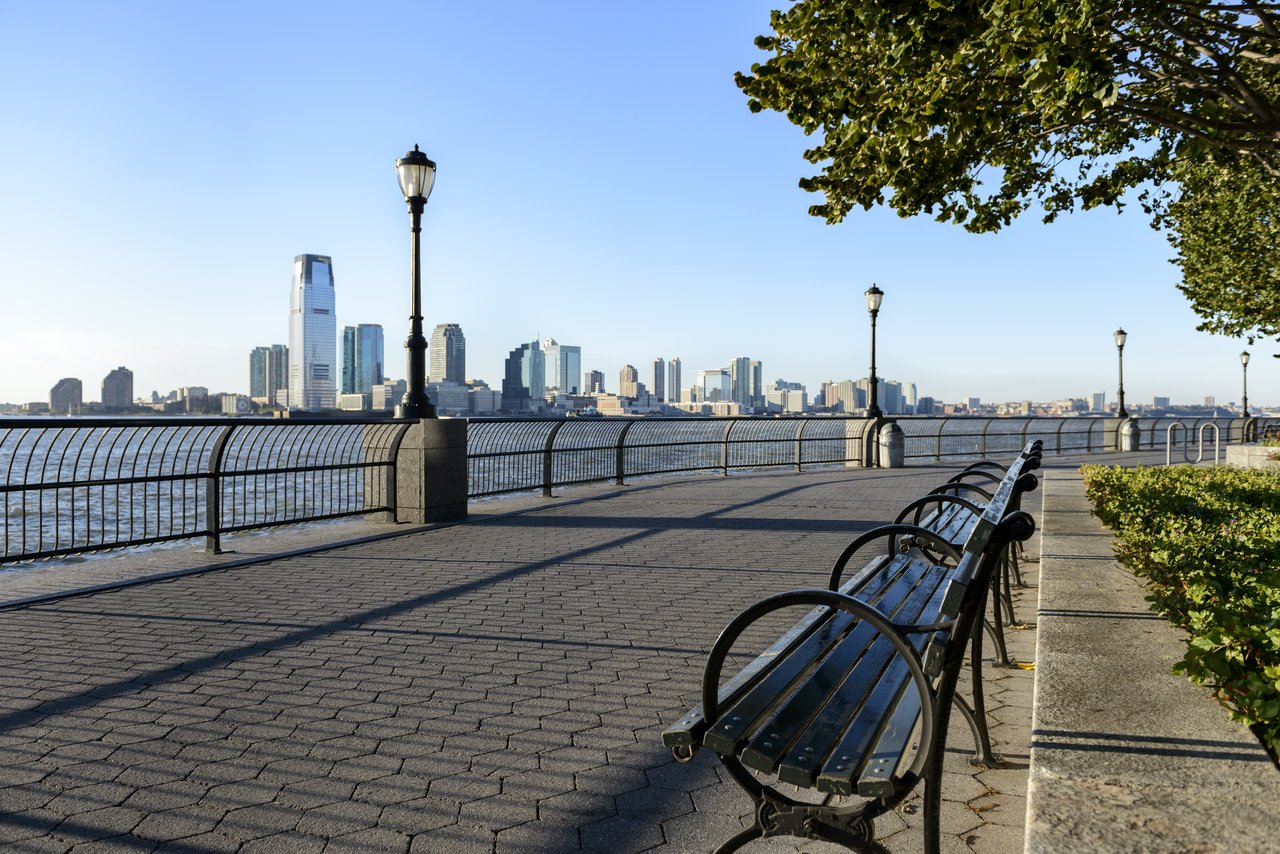
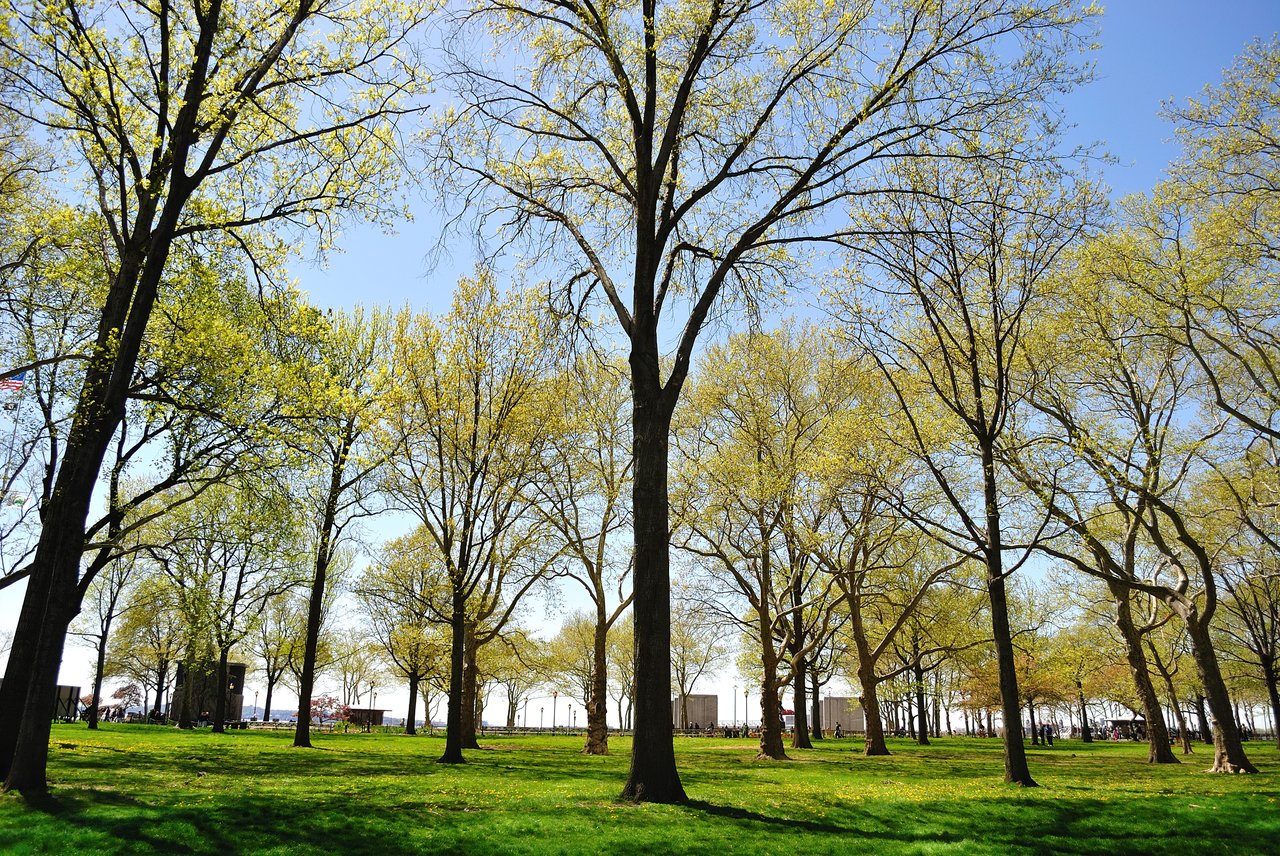
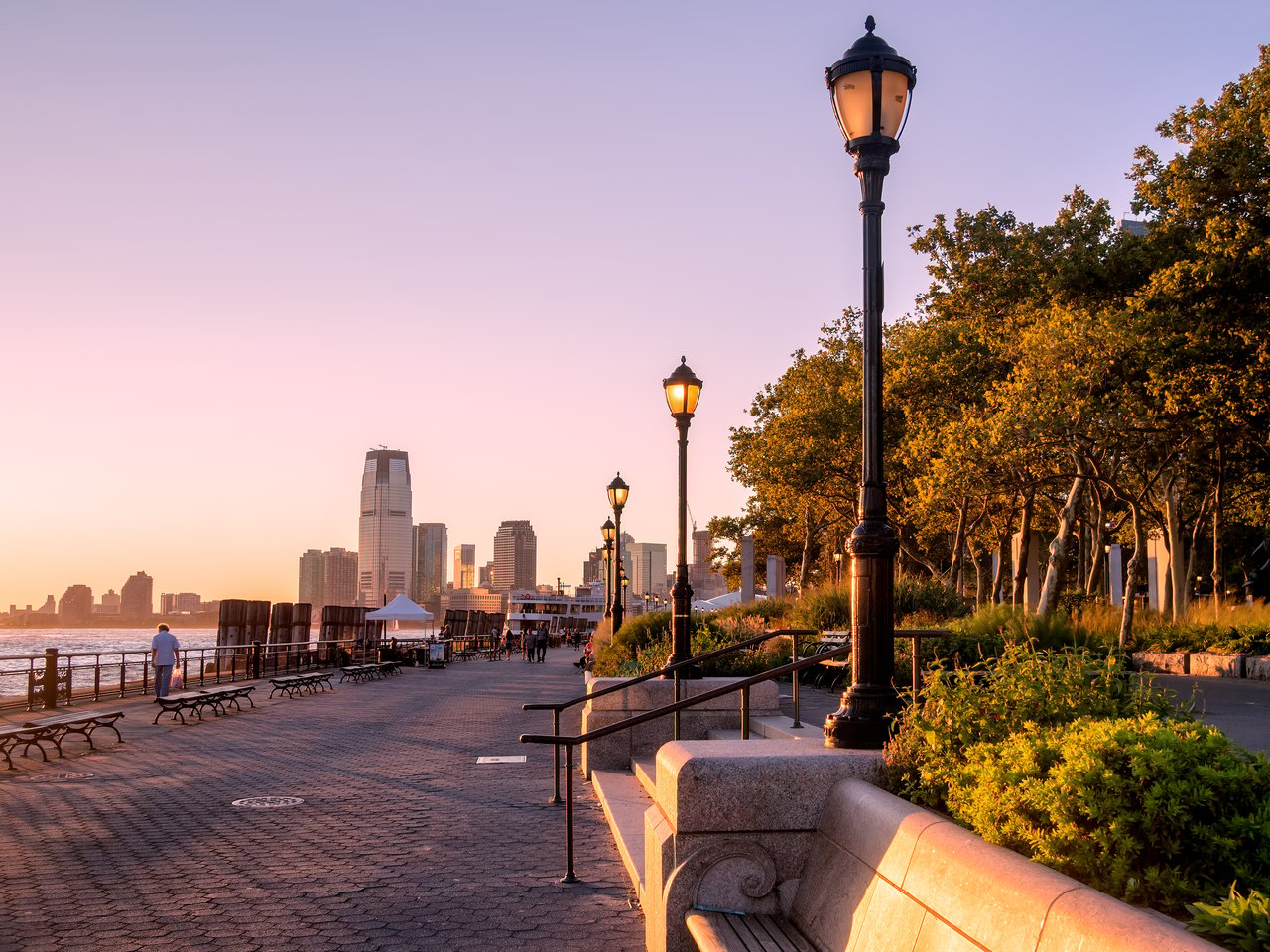
The defining feature is the waterfront. The Hudson River esplanade runs continuously along the western edge, connecting a series of parks, gardens, and public spaces. Rockefeller Park at the north end, the South Cove, and the ballfields are all part of a master plan that set aside roughly a third of the neighborhood's acreage for open space. For a downtown neighborhood, that amount of green space and waterfront access is the central reason buyers choose it.
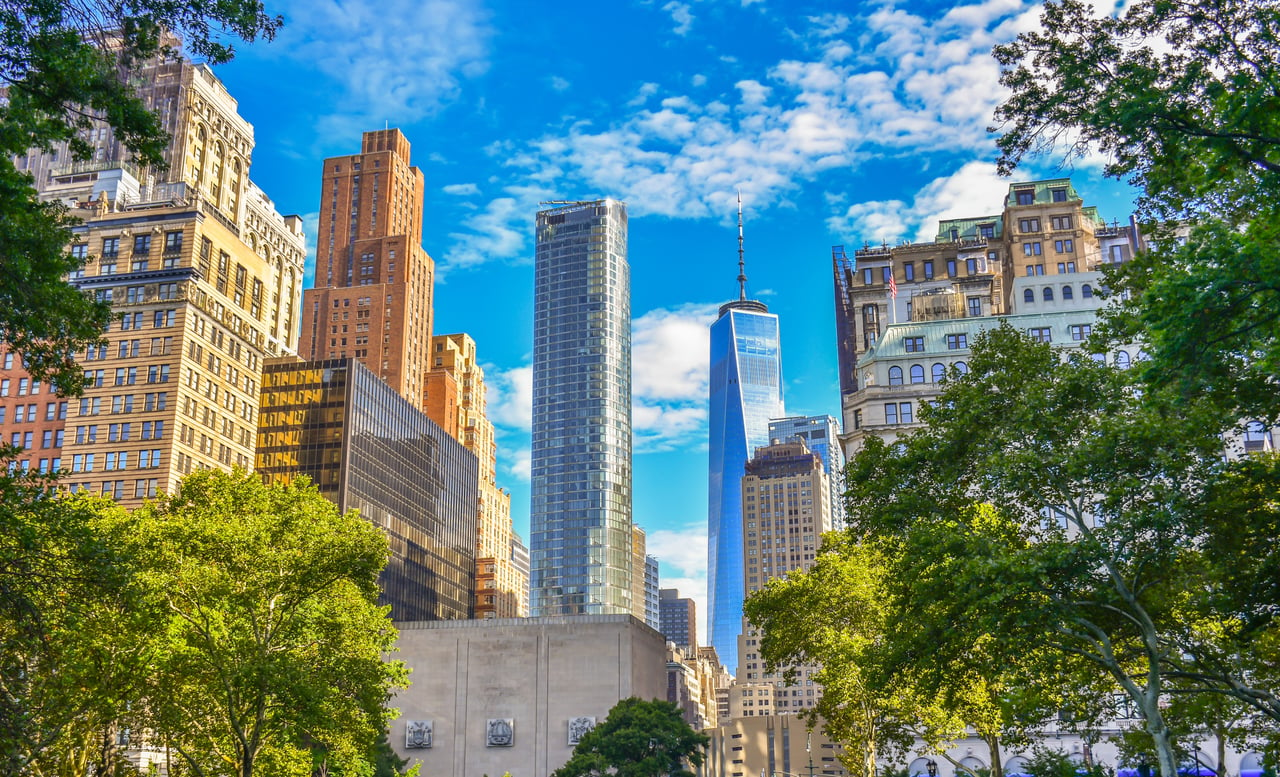
The street-level character is calmer and more engineered than the rest of lower Manhattan. The retail and dining are functional and convenient, concentrated around Brookfield Place to the north and a handful of corridors within the neighborhood. Brookfield Place itself, the office and retail complex on the northern edge, delivers higher-end shopping and dining and anchors the neighborhood's commercial side.
The trade-off in daily life is separation. West Street is a wide, fast road that separates Battery Park City from the rest of lower Manhattan, and the neighborhood can feel cut off from the downtown grid as a result.
The residential stock is condo and co-op, built largely from the mid-1980s through the late 2000s.
The newer waterfront buildings are the most sought-after tier. The Solaire at 20 River Terrace (2003), The Visionaire (2008), and Riverhouse at 2 River Terrace (2008) were built to environmental standards that were pioneering for their era, with river-facing exposures and full amenity packages. The Ritz-Carlton Downtown at 10 West Street (2001) anchors the southern end with hotel-integrated condo residences and harbor views.
The earlier 1980s buildings around Rector Place and Gateway form the original residential core. These trade at lower price points than the newer waterfront towers and make up a meaningful share of the neighborhood's inventory.
Across both tiers, the buildings share the neighborhood's ground-lease structure, which affects every purchase here and is covered below.
The most important thing to understand about Battery Park City is that you own your home, but not the land underneath it.
Think of it the way you would renting the lot your house sits on. You own the house outright. The ground beneath it belongs to someone else, in this case a state agency called the Battery Park City Authority, and you pay to use it. That payment is called ground rent, and it comes on top of a separate payment that stands in for property taxes.
There is also an end date. The current leases run until 2069. After that, the arrangement has to be renegotiated, and right now those renegotiations happen one building at a time. There has been movement toward extending that horizon, but it is not automatic and not yet settled for every building.
For a buyer, all of this shows up in two places. First, your monthly cost is higher than the property taxes alone would suggest, because you are also paying ground rent. Second, the lease has an end date, and as it gets closer, lenders pay attention to how many years are left. That can make a home harder to finance and to resell down the road, which is why the remaining lease term on the specific building matters.
None of this makes Battery Park City a bad place to buy. People have owned and loved homes here for forty years. It simply means this is a neighborhood where you check the exact lease terms and monthly costs on the specific building before you fall in love with the view.
Battery Park City is separated from the rest of lower Manhattan, by design and by West Street. Buyers who want to walk out into the downtown grid will feel the distance, and the neighborhood's calm comes partly from that separation.
The dining and retail, outside of Brookfield Place, are convenient rather than destination-level. Buyers who want a robust restaurant scene right outside their door will be traveling for it.
The ground-lease structure is the defining financial fact of the neighborhood. It is manageable and well-understood, but it asks a buyer to do more diligence on carrying costs and lease terms than a standard condo purchase elsewhere downtown.
For the right buyer, the waterfront, the open space, and the residential calm are the entire reason to be here. No other neighborhood in Manhattan delivers this much green space and continuous river access, and which buyers value above the trade-offs that come with it.
Local Highlights
Eat & Drink
Restaurants, Cafés & Bars
Shop
Retail & Boutiques
Arts & Culture
Museums & Cultural Attractions
Wellness & Recreation
Fitness & Active Living
5,960 people live in Battery Park City, where the median age is 39.4 and the average individual income is $207,028. Data provided by the U.S. Census Bureau.
Total Population
Median Age
Population Density
Average individual Income
There's plenty to do around Battery Park City, including shopping, dining, nightlife, parks, and more. Data provided by Walk Score and Yelp.
Explore popular things to do in the area, including NYC Restaurant Week Truck, Bill's Lobby Stand, and 32 Mott Street General Store.
| Name | Category | Distance | Reviews |
Ratings by
Yelp
|
|---|---|---|---|---|
| Dining | 0.42 miles | 1 review | 4/5 stars | |
| Dining | 0.8 miles | 0 reviews | 0/5 stars | |
| Dining | 0.87 miles | 0 reviews | 0/5 stars | |
| Shopping | 0.37 miles | 0 reviews | 0/5 stars | |
| Shopping | 0.65 miles | 0 reviews | 0/5 stars | |
| Shopping | 0.66 miles | 0 reviews | 0/5 stars | |
| Shopping | 0.71 miles | 0 reviews | 0/5 stars | |
| Shopping | 0.82 miles | 0 reviews | 0/5 stars | |
| Shopping | 0.91 miles | 0 reviews | 0/5 stars | |
| Active | 0.47 miles | 0 reviews | 0/5 stars | |
| Active | 0.47 miles | 0 reviews | 0/5 stars | |
| Active | 0.47 miles | 0 reviews | 0/5 stars | |
| Active | 0.53 miles | 0 reviews | 0/5 stars | |
| Active | 0.53 miles | 0 reviews | 0/5 stars | |
| Active | 0.55 miles | 0 reviews | 0/5 stars | |
| Active | 0.6 miles | 0 reviews | 0/5 stars | |
| Active | 0.74 miles | 0 reviews | 0/5 stars | |
| Active | 0.88 miles | 0 reviews | 0/5 stars | |
| Beauty | 0.47 miles | 0 reviews | 0/5 stars | |
| Beauty | 0.5 miles | 0 reviews | 0/5 stars | |
| Beauty | 0.61 miles | 1 review | 5/5 stars | |
| Beauty | 0.69 miles | 0 reviews | 0/5 stars | |
| Beauty | 0.89 miles | 1 review | 5/5 stars | |
|
|
||||
|
|
||||
|
|
||||
|
|
||||
|
|
||||
|
|
Battery Park City has 2,584 households, with an average household size of 2.31. Data provided by the U.S. Census Bureau. Here’s what the people living in Battery Park City do for work — and how long it takes them to get there. Data provided by the U.S. Census Bureau. 5,960 people call Battery Park City home. The population density is 86,796 and the largest age group is Data provided by the U.S. Census Bureau.
Total Population
Population Density Population Density This is the number of people per square mile in a neighborhood.
Median Age
Men vs Women
Population by Age Group
0-9 Years
10-17 Years
18-24 Years
25-64 Years
65-74 Years
75+ Years
Education Level
Total Households
Average Household Size
Average individual Income
Households with Children
With Children:
Without Children:
Blue vs White Collar Workers
Blue Collar:
White Collar: