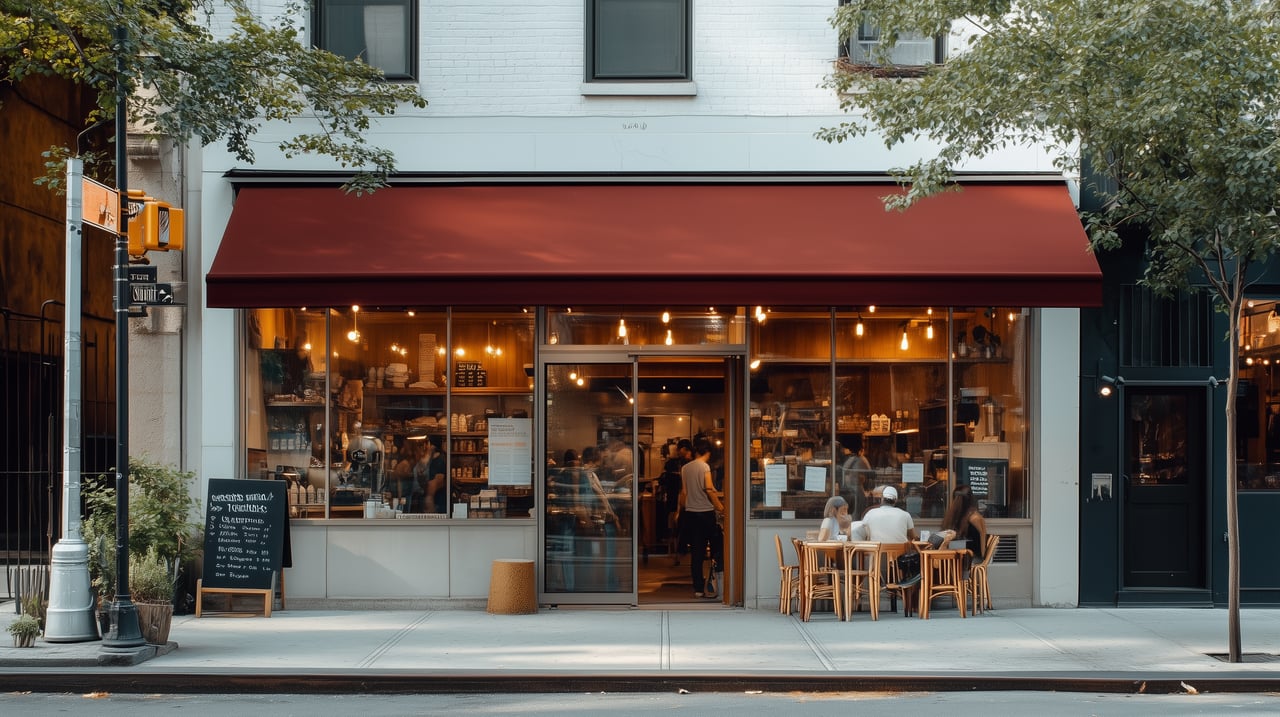
Hell's Kitchen
34th Street to 59th Street, from Eighth Avenue to the Hudson. One of the most transit-rich locations in Manhattan, and the neighborhood that sits directly adjacent to the Broadway theater district.
Hell's Kitchen is for buyers who want Midtown access without Midtown pricing and without giving up local character.
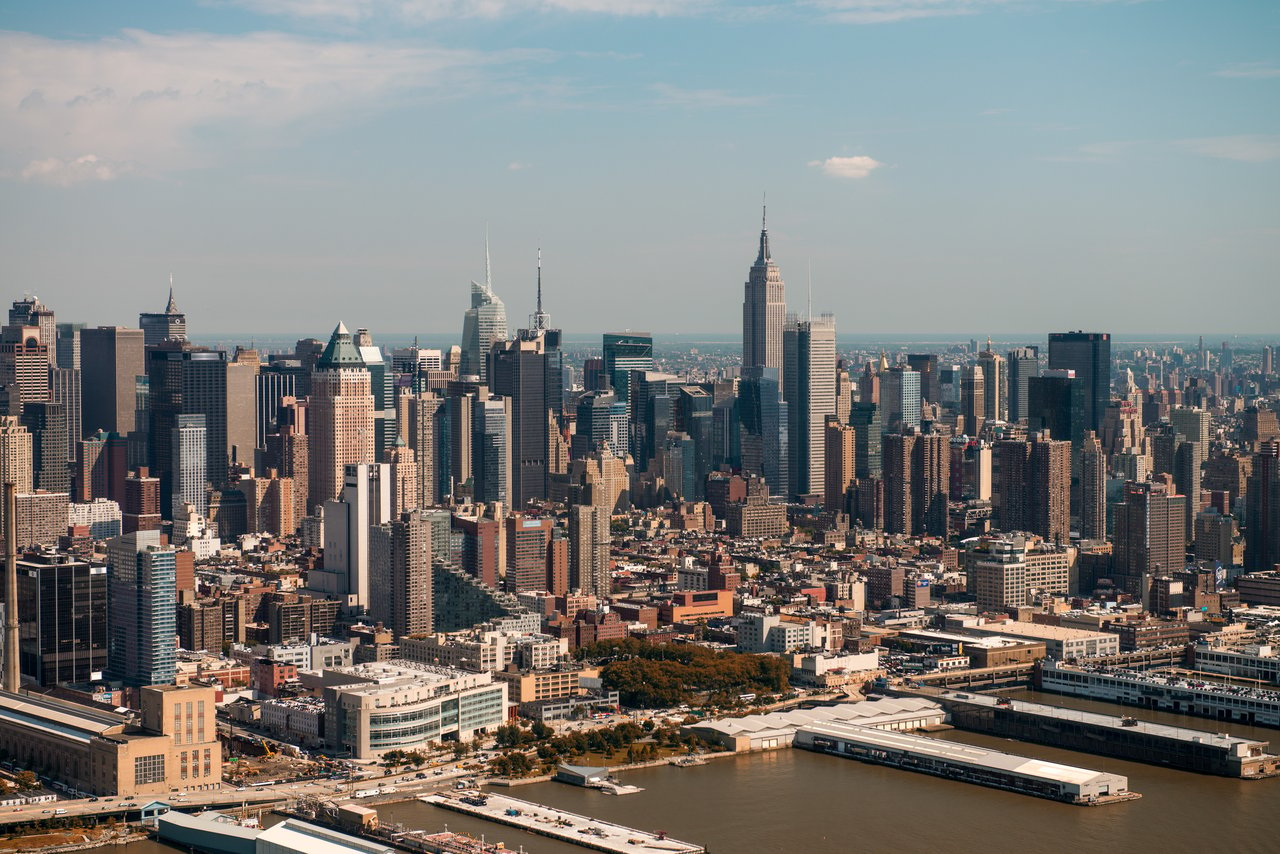
The neighborhood sits between Penn Station and the Lincoln Tunnel to the south, Hudson Yards to the southeast, and Central Park to the north. That geography matters. Transit in every direction. The west side of Manhattan at a price per square foot that the neighborhoods above and below it cannot match.
These are buyers who travel frequently, commute regularly, or use the city in multiple directions at once. The building stock skews toward rental conversions and newer condo product rather than the prewar co-ops of the Upper West Side or the landmarked lofts of Tribeca. The buyer who needs a building with maximum city access tends to find what they are looking for here.
Hell's Kitchen runs from 34th Street north to 59th, between Eighth Avenue and the Hudson River.
The name comes from the neighborhood's reputation as one of the roughest blocks in 19th-century Manhattan. Residents tried to rebrand it as “Clinton” in the 1960s to soften its image, which is still how it appears on some city maps, but locals refer to it lovingly as Hell’s Kitchen.
The neighborhood divides naturally along Tenth Avenue.
East of Tenth is where the dining and nightlife strip lives. Ninth Avenue from the 40s through the 50s is the most concentrated stretch, with restaurants, bars, and small markets running continuously for over a mile. The variety reflects how the neighborhood assembled itself over decades: Italian, Greek, Mexican, Korean, Japanese, and Colombian restaurants operating within a few blocks of each other, many in the same locations for years. The Broadway theater district begins along Eighth Avenue at the eastern edge, pushing into Times Square and central Midtown, putting world-class entertainment within a short walk for anyone who lives here.
West of Tenth Avenue the character shifts. The blocks between Tenth and the West Side Highway are quieter and more residential. The Hudson River Greenway runs along the waterfront, and Riverside Park South extends north from this stretch. The farther west you go, the more the Times Square crowds dissipate and the neighborhood settles into something that feels genuinely residential. That is where the local charm is most present.
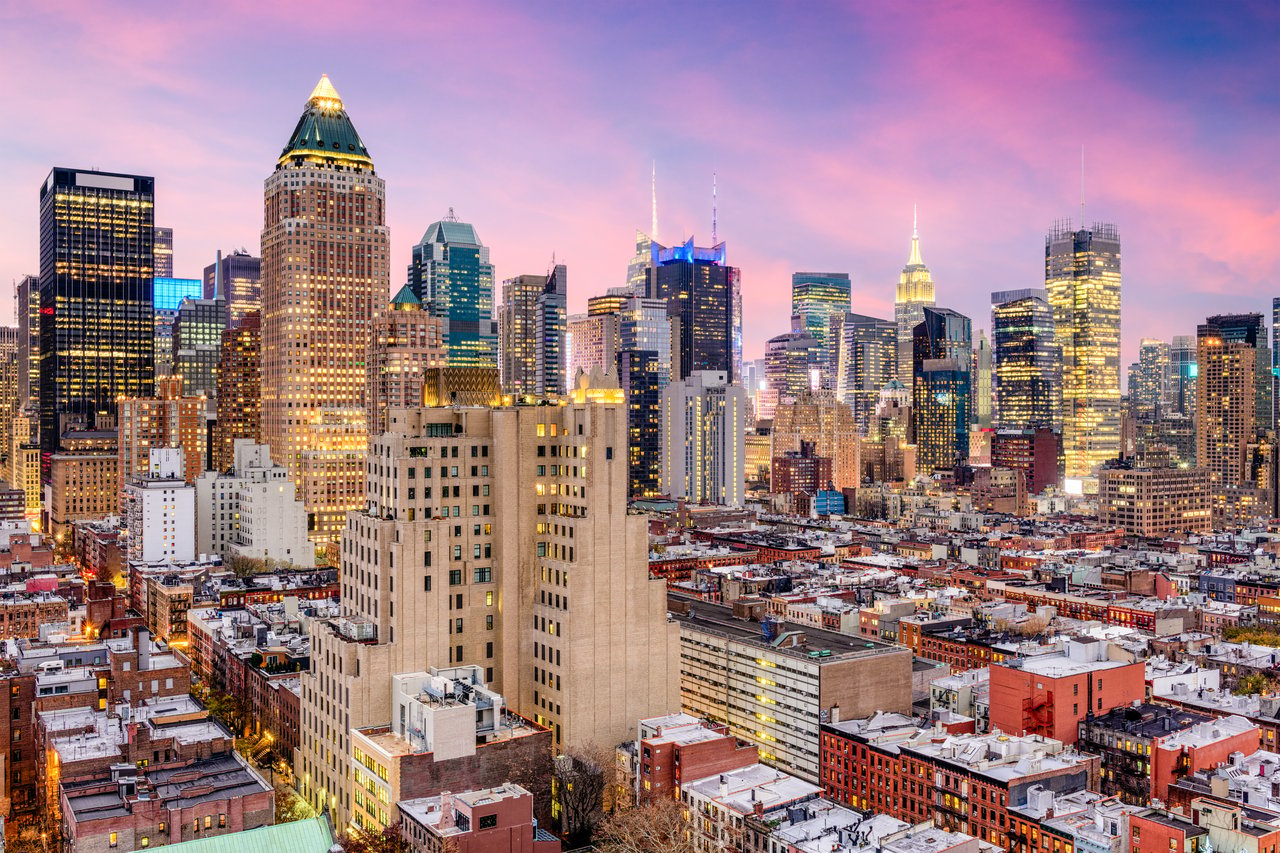
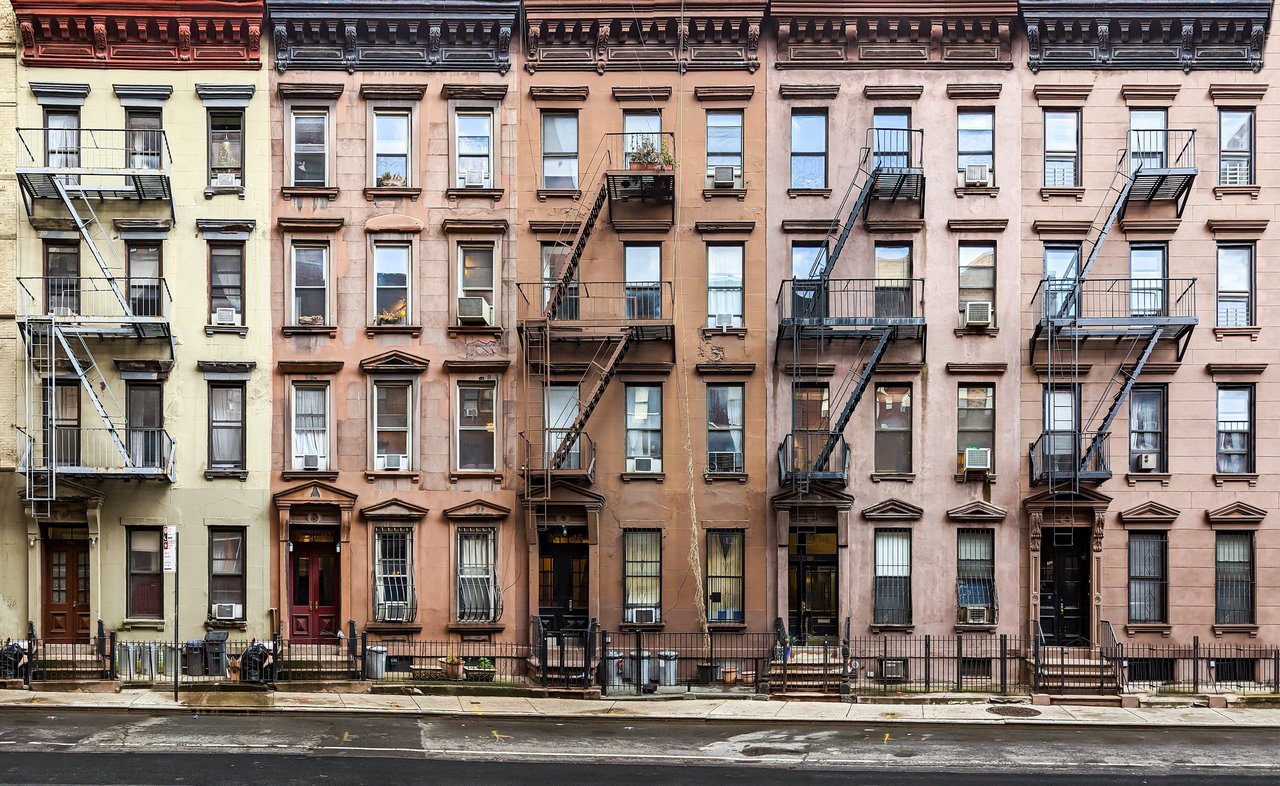
Hell's Kitchen's residential stock divides into three categories, with clear distinctions.
The dominant stock is rental. Mid-rise walk-ups, older low-rise rowhouses, and a significant number of postwar mid-rises operate almost entirely as rental. The for-sale inventory is a subset of the total building count, not the majority.
The condo tier runs from conversion buildings to newer ground-up development. Stella Tower at 425 West 50th Street is the prewar anchor: a 1931 building converted to condominium use with 50 residences. The Sorting House at 318 West 52nd Street is a boutique 30-residence conversion. Central Park Place at 301 West 57th Street is the large-scale exception: 270 condos in a 1988 building at the neighborhood's northern edge, close to the park.
The newer condo development has concentrated along the western avenues. The Gild at 441 West 54th Street (28 condos, 2023) and Linden Lane at 349 West 51st Street (32 condos, 2025) represent the boutique new-construction tier. The West Residence Club at 547 West 47th Street (222 condos) is the largest active sponsor building in the neighborhood.
Buyers choosing between the conversion tier and the newer condo product are choosing between the scale and character of older buildings and the modern layouts and systems of ground-up construction. Both trade at meaningful discounts compared to similar products in Chelsea or the West Village.
Hell's Kitchen is active in a way that does not fully let up. The dining strip on Ninth Avenue, the theater traffic on Eighth, and the proximity to Penn Station mean the neighborhood does not settle into residential quiet at night. Buyers who need quiet blocks will find them on the western streets near the Hudson River. Buyers who want the whole neighborhood to quiet down should look elsewhere.
The for-sale inventory is real but thin relative to the neighborhood's total size. Buyers on a timeline may find the selection narrower than expected, particularly in the prewar conversion tier.
The western waterfront blocks are the best-positioned residences in the neighborhood. They deliver river access, the Greenway, and the relative quiet of the western streets, and they are priced to reflect it.
For the right buyer, the access and the local character are the draw. Penn Station, the Hudson Yards transit connections, the A/C/E, and the Lincoln Center neighborhood at the north all place this buyer in the middle of the city's infrastructure. At a price point that few other Manhattan neighborhoods can match.
Local Highlights
Eat & Drink
Restaurants, Cafés & Bars
Arts & Culture
Galleries, Museums & Venues
52,986 people live in Hell's Kitchen, where the median age is 43 and the average individual income is $108,355. Data provided by the U.S. Census Bureau.
Total Population
Median Age
Population Density
Average individual Income
There's plenty to do around Hell's Kitchen, including shopping, dining, nightlife, parks, and more. Data provided by Walk Score and Yelp.
Explore popular things to do in the area, including Martin's News & Sundry, Dom Fetele, and MJM fitness.
| Name | Category | Distance | Reviews |
Ratings by
Yelp
|
|---|---|---|---|---|
| Shopping | 0.32 miles | 0 reviews | 0/5 stars | |
| Shopping | 0.4 miles | 0 reviews | 0/5 stars | |
| Active | 0.19 miles | 0 reviews | 0/5 stars | |
| Active | 0.25 miles | 0 reviews | 0/5 stars | |
| Active | 0.32 miles | 0 reviews | 0/5 stars | |
| Nightlife | 0.36 miles | 1 review | 5/5 stars | |
|
|
||||
|
|
||||
|
|
||||
|
|
||||
|
|
||||
|
|
Hell's Kitchen has 32,663 households, with an average household size of 1. Data provided by the U.S. Census Bureau. Here’s what the people living in Hell's Kitchen do for work — and how long it takes them to get there. Data provided by the U.S. Census Bureau. 52,986 people call Hell's Kitchen home. The population density is 109,345 and the largest age group is Data provided by the U.S. Census Bureau.
Total Population
Population Density Population Density This is the number of people per square mile in a neighborhood.
Median Age
Men vs Women
Population by Age Group
0-9 Years
10-17 Years
18-24 Years
25-64 Years
65-74 Years
75+ Years
Education Level
Total Households
Average Household Size
Average individual Income
Households with Children
With Children:
Without Children:
Blue vs White Collar Workers
Blue Collar:
White Collar:
140 Franklin Street New York, NY 10013
140 Franklin Street New York, NY 10013


