Midtown
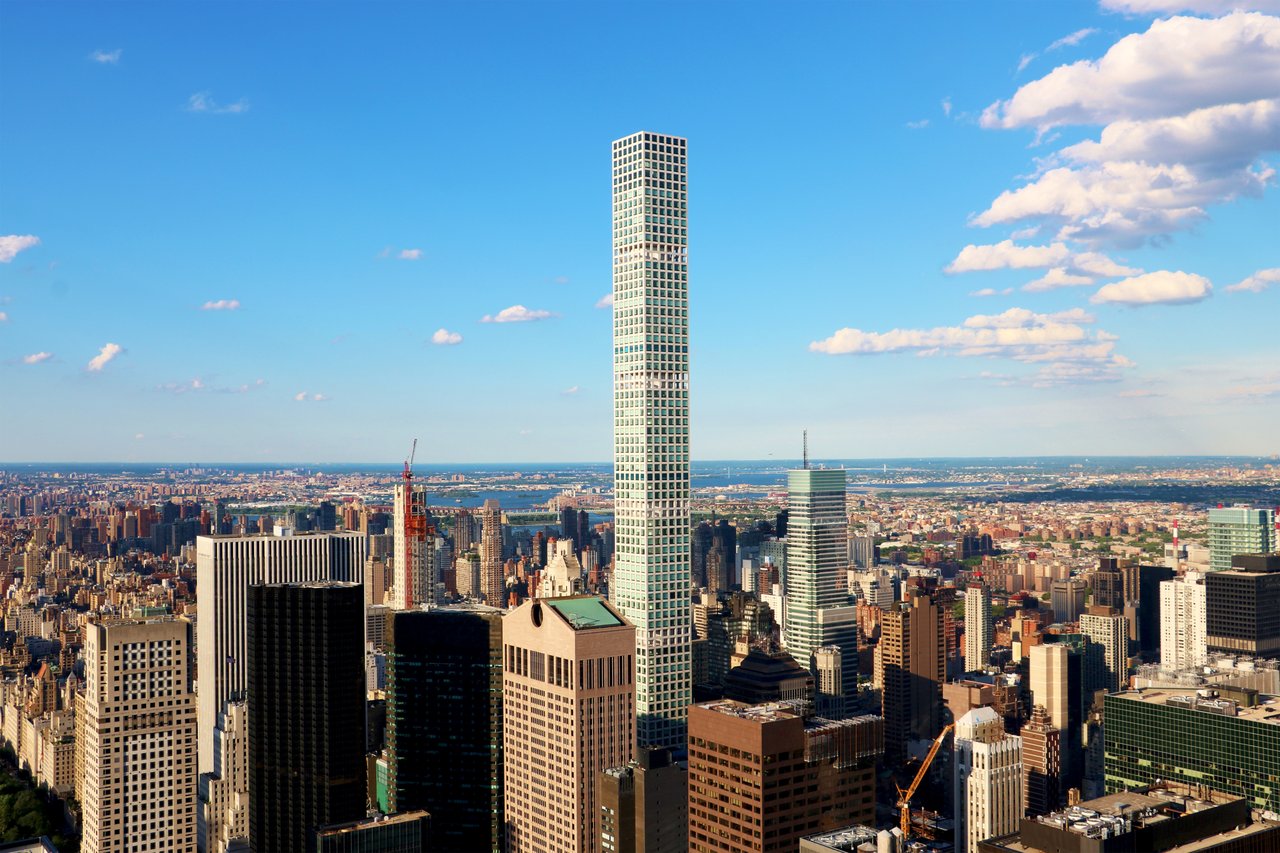
The commercial center of New York and one of the city's most diverse residential markets, where landmark office towers, luxury condominiums, historic prewar buildings, and world-famous destinations all exist within a few square miles.
Midtown is for buyers who want to be at the center of Manhattan, where nearly every subway line, major employer, cultural institution, and luxury retailer is within walking distance.
Unlike neighborhoods defined by a single architectural style or residential identity, Midtown offers buyers a range of living experiences. Some want a full-service condominium overlooking Bryant Park. Others are drawn to classic prewar cooperatives on Park Avenue, newer glass towers near Hudson Yards, or discreet residential streets tucked behind the commercial avenues.
The decision here is less about choosing one type of neighborhood than deciding how closely a buyer wants to live alongside Manhattan's business, hospitality, and cultural core. Midtown offers unmatched convenience, but it asks buyers to embrace the energy that comes with it.

Midtown generally stretches from 34th Street to 59th Street, bounded by the Hudson River to the west and the East River to the east, although buyers often think of it in smaller districts: Bryant Park, Grand Central, Rockefeller Center, Times Square, Hudson Yards, and Sutton Place at the eastern edge.
The defining characteristic is density. Midtown contains the city's largest concentration of office buildings, hotels, theaters, transportation hubs, and corporate headquarters. During the workweek, millions of people move through the neighborhood each day, making it one of the busiest urban centers in the world.
Despite its commercial reputation, Midtown has steadily expanded as a residential neighborhood over the past two decades. Older office buildings have been converted into apartments, and new condominium towers have filled former development sites.
Public spaces provide important relief from the surrounding density. Bryant Park serves as Midtown's backyard, while Rockefeller Center, Fifth Avenue, Grand Central Terminal, and the Theater District give the neighborhood a civic and cultural identity few cities can match.
Street life changes block by block. Fifth Avenue is dominated by flagship luxury retailers. Times Square is one of the world's busiest tourist destinations. Park Avenue offers a more formal streetscape defined by office towers and prewar apartment buildings, while residential pockets emerge on quieter side streets throughout the neighborhood.

Midtown's residential inventory falls into four broad categories.
The luxury condominium towers represent the fastest-growing segment. Buildings like 520 Fifth Avenue, The Centrale, 53 West 53 and Central Park Tower at Midtown's northern edge offer modern construction, extensive amenities, concierge services, and floor-to-ceiling glass with skyline views. Many have been completed within the past decade and cater to buyers seeking new construction in a full-service environment.
The prewar cooperatives remain some of Midtown's most established addresses. Along Park Avenue, Sutton Place, and select side streets, buyers find limestone buildings dating from the 1920s through the 1940s, featuring larger layouts, classic architectural detailing, and the board approval process typical of Manhattan co-ops.
The condominium conversions occupy a distinctive middle ground. Former office buildings and hotels have been transformed into luxury residences, often combining historic architecture with modern interiors. Buildings such as The Bryant and several conversions around Bryant Park and Grand Central appeal to buyers who appreciate older construction without traditional co-op restrictions.
The mixed-use residential towers reflect Midtown's evolution. Many newer developments combine residential condominiums with hotels, office space, or retail, creating buildings that function as vertical neighborhoods rather than purely residential addresses.

Midtown remains one of Manhattan's most active development markets, although the pace has slowed from the previous decade. New office construction continues to reshape the Park Avenue corridor, while residential development increasingly focuses on mixed-use towers and office-to-residential conversions.
Several major residential projects are planned or underway along Fifth Avenue, Park Avenue, and the western side of Midtown, with additional office conversion proposals expected as owners reposition older commercial buildings. Because many projects involve complex zoning, landmark approvals, or conversion work, delivery schedules often extend over several years.
Rather than one defining project, Midtown's future will be shaped by a steady pipeline of redevelopment that continues to increase its residential population while maintaining its role as New York's primary business district.

Midtown offers unparalleled convenience, but buyers should understand that it is first and foremost the center of New York City.
Foot traffic is constant. Hotels, office workers, tourists, commuters, and theatergoers create activity throughout the day and well into the evening. Even residential side streets rarely feel isolated from the surrounding city.
Building character varies dramatically from block to block. A quiet Park Avenue cooperative offers a very different experience from a glass condominium overlooking Times Square or a mixed-use tower near Hudson Yards. Buyers should evaluate not only the building itself but also the immediate streetscape surrounding it.
The premium for convenience is real. Buyers gain immediate access to transportation, dining, shopping, Broadway, museums, and Central Park, often without relying on a car or lengthy commute. In exchange, they accept a neighborhood that is rarely quiet and always in motion.
For buyers who want Manhattan at its most connected, no neighborhood offers more. Midtown is not designed to feel removed from the city. It is the city, concentrated into a few extraordinary square miles.
315,772 people live in Midtown, where the median age is 41 and the average individual income is $130,495. Data provided by the U.S. Census Bureau.
Total Population
Median Age
Population Density
Average individual Income
There's plenty to do around Midtown, including shopping, dining, nightlife, parks, and more. Data provided by Walk Score and Yelp.
Explore popular things to do in the area, including Levine Leo, Evan Roberts, and Nebiani Designs.
| Name | Category | Distance | Reviews |
Ratings by
Yelp
|
|---|---|---|---|---|
| Shopping | 0.09 miles | 0 reviews | 0/5 stars | |
| Shopping | 0.1 miles | 1 review | 1/5 stars | |
| Shopping | 0.1 miles | 0 reviews | 0/5 stars | |
| Shopping | 0.1 miles | 0 reviews | 0/5 stars | |
| Shopping | 0.1 miles | 0 reviews | 0/5 stars | |
| Shopping | 0.1 miles | 0 reviews | 0/5 stars | |
| Shopping | 0.12 miles | 0 reviews | 0/5 stars | |
| Shopping | 0.13 miles | 0 reviews | 0/5 stars | |
| Shopping | 0.13 miles | 0 reviews | 0/5 stars | |
| Shopping | 0.13 miles | 0 reviews | 0/5 stars | |
| Shopping | 0.13 miles | 0 reviews | 0/5 stars | |
| Shopping | 0.13 miles | 0 reviews | 0/5 stars | |
| Shopping | 0.13 miles | 0 reviews | 0/5 stars | |
| Shopping | 0.14 miles | 0 reviews | 0/5 stars | |
| Shopping | 0.14 miles | 0 reviews | 0/5 stars | |
| Shopping | 0.14 miles | 0 reviews | 0/5 stars | |
| Shopping | 0.16 miles | 0 reviews | 0/5 stars | |
| Shopping | 0.17 miles | 0 reviews | 0/5 stars | |
| Shopping | 0.19 miles | 0 reviews | 0/5 stars | |
| Active | 0.11 miles | 0 reviews | 0/5 stars | |
| Active | 0.13 miles | 0 reviews | 0/5 stars | |
| Beauty | 0.16 miles | 1 review | 5/5 stars | |
| Beauty | 0.16 miles | 0 reviews | 0/5 stars | |
| Beauty | 0.18 miles | 0 reviews | 0/5 stars | |
|
|
||||
|
|
||||
|
|
||||
|
|
||||
|
|
||||
|
|
Midtown has 177,439 households, with an average household size of 2. Data provided by the U.S. Census Bureau. Here’s what the people living in Midtown do for work — and how long it takes them to get there. Data provided by the U.S. Census Bureau. 315,772 people call Midtown home. The population density is 101,992 and the largest age group is Data provided by the U.S. Census Bureau.
Total Population
Population Density Population Density This is the number of people per square mile in a neighborhood.
Median Age
Men vs Women
Population by Age Group
0-9 Years
10-17 Years
18-24 Years
25-64 Years
65-74 Years
75+ Years
Education Level
Total Households
Average Household Size
Average individual Income
Households with Children
With Children:
Without Children:
Blue vs White Collar Workers
Blue Collar:
White Collar:
140 Franklin Street New York, NY 10013
140 Franklin Street New York, NY 10013